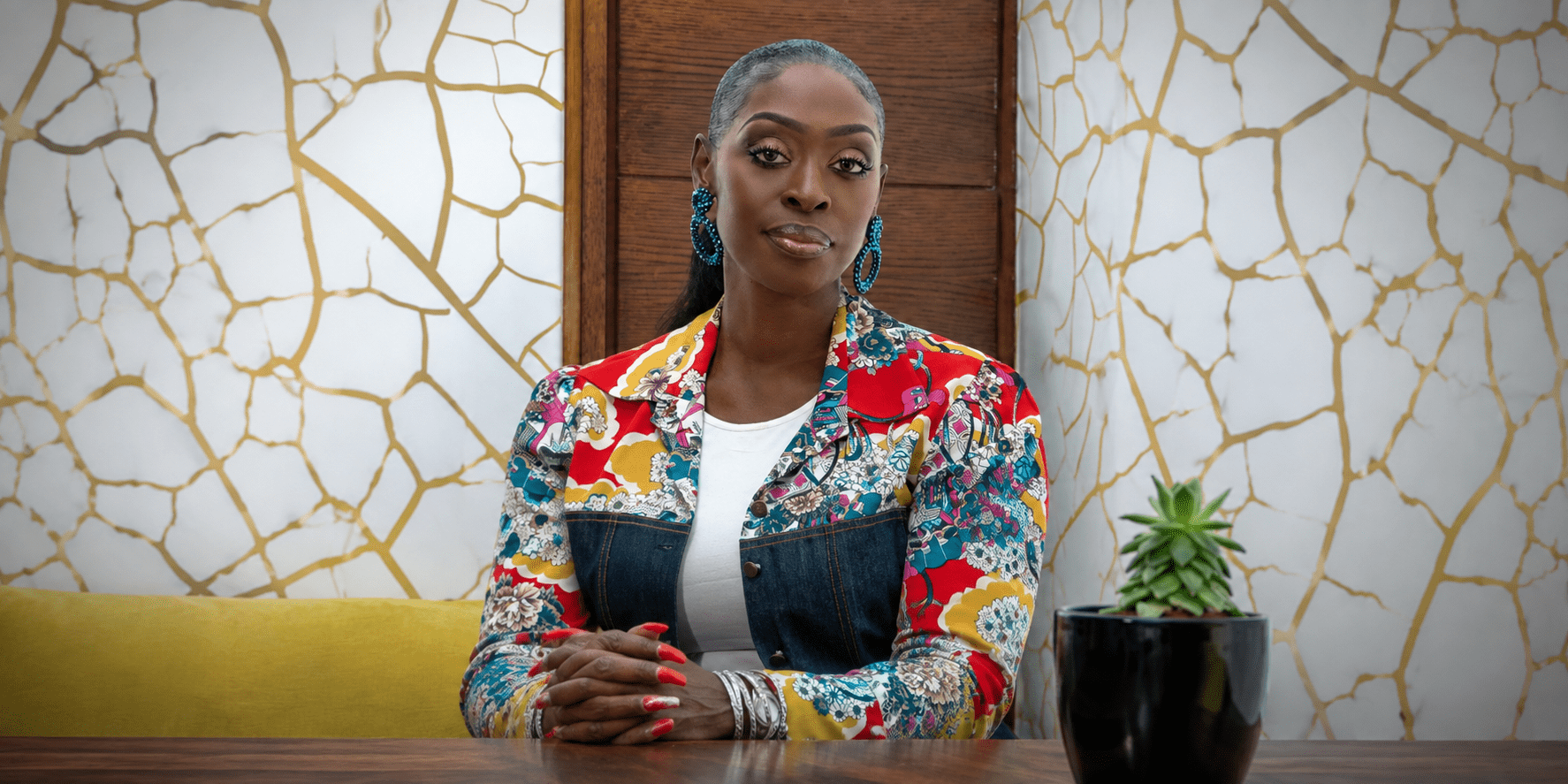
Dilys Sillah is reframing silence, communication, and artificial intelligence through the lens of restored human wholeness.
There is a kind of silence that hides in plain sight, in boardrooms, families, leadership, and intimate relationships. It can look like politeness, humility, or strength, while carrying years of conditioning: do not speak too loudly, challenge authority, expose pain, or take up space. For more than three decades, Dilys Sillah has listened for that silence. Now, as AI asks people to speak, she explores what happens when those taught to shrink their voices are given a powerful new tool for expression.
Dilys Sillah And The Cost Of Silence
Dilys Sillah has never built her work around surface-level answers. A bestselling author, human development practitioner, communication specialist, executive leadership coach, TEDx alumna, broadcaster, and creator of the Glass Framework™, she works where identity, language, culture, leadership, and technology collide.
For Sillah, communication is not simply about speaking clearly. It is whether people have been permitted, prepared, and internally resourced to speak at all. Her work speaks to people who have been shaped by cultural, religious, or family systems that reward quietness over self-expression. This conditioning can manifest as hesitation, strained relationships, muted leadership, emotional exhaustion, and feeling unheard.
“The conditioning gap is real. And it is costing us everything,” Sillah says. That phrase captures the central tension in her current work. People are now expected to communicate in faster, more public, and more technologically mediated ways than ever before. Yet many were raised in environments where voice was not cultivated as power. It was treated as risk.
In organizational life, that conditioning can affect who speaks in meetings, who challenges decisions, who offers ideas, and who feels able to lead or experiment. What appears to be a capability problem may have a capacity issue underneath it.
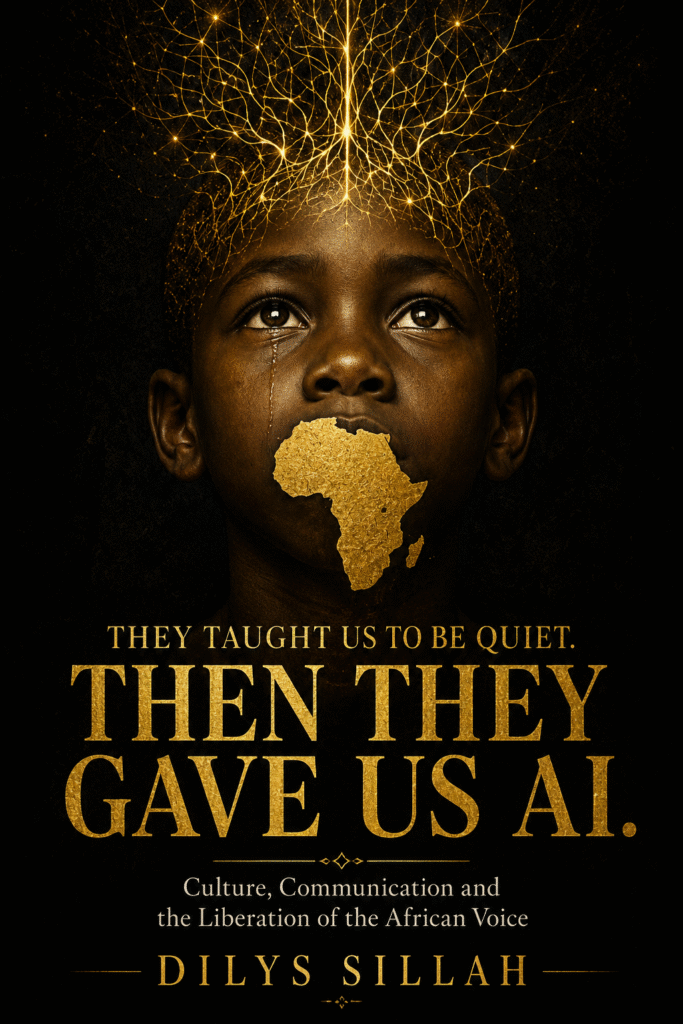
Her forthcoming book, They Taught Us to Be Quiet. Then They Gave Us AI. Culture, Communication and the Liberation of the African Voice, due for publication in 2027, brings that question into sharp focus. The book examines what the rise of artificial intelligence means for those whose voices were shaped, softened, or suppressed long before they ever opened a laptop. It is not a technology book in the narrow sense. It is a book about culture, about how we communicate, and about who gets permission to be heard.
The Glass Framework™ And Restored Wholeness
The origin of Sillah’s influence lies in a deceptively simple premise: every human being is born whole. Life, however, can deplete that wholeness. The work, then, is not reconstruction. It is restoration. That idea forms the foundation of the Glass Framework™, her original methodology for understanding human depletion, capacity, and inner restoration.
This framework separates her approach from disciplines such as counseling, psychotherapy, and coaching, which typically begin with the presenting adult, the point at which a problem has been identified and a solution is sought. Sillah’s methodology begins earlier, at birth, with the premise of inherent wholeness. She looks beyond immediate conflict, presentation skills, grief responses, relational patterns, or leadership blocks to ask a deeper question: what happened to the wholeness that was once there?
The answer is rarely simple. Loss can deplete it. Shame can deplete it. Rejection, cultural pressure, emotional abandonment, religious fear, grief, silence, and survival roles can all leave people functioning while inwardly fragmented. Sillah’s work does not reduce those experiences to quick fixes or motivational slogans. Instead, it invites people to understand capacity. What can they hold? What have they been carrying without support? What has been demanded of them that they never had the internal room to sustain?
“You cannot sustain what you do not have the capacity to hold,” she says. It is a statement that applies to leadership, love, grief, ambition, and visibility.
It also offers an important distinction for organizations: capability is what a person or organization can do: the skills, knowledge, systems, and technology available to them. Capacity is the underlying foundation that determines how capability can be developed, integrated and sustained. For Sillah, capability cannot be considered separately from the capacity of the human beings expected to exercise it.
That lens has shaped her books, coaching, speaking, and live broadcasts. Her bestselling book Not This Widow established her as a compassionate and trusted voice on grief, healing, and resilience. Her wider body of work has drawn an audience of more than 50,000 people through live conversations on relationships, love, loss, and the cost of being human. The appeal is not spectacle. It is recognition. People hear in her work the language for experiences they have carried privately for years.
Dilys Sillah On AI And The Human Voice
Artificial intelligence has made communication feel both easier and more confronting. It can draft an email, refine a speech, generate ideas, summarize arguments, and help users speak in formats that once felt inaccessible. Yet for Sillah, the deeper disruption is not merely technical. It is psychological and cultural. AI does not wait for a person to feel entitled to speak. It does not understand inherited quietness. It asks for clarity of thought.
This is where her Presence Framework™ becomes relevant. It examines presence as the layer beneath conventional communication technique, the reason the same words can produce entirely different outcomes depending on who delivers them and the human context in which they’re received. An AI-drafted message can be grammatically flawless and still lack the presence required to be believed.
“Artificial intelligence does not know about the silence that was taught to you before you were old enough to protect your voice. It simply asks you to speak. And that changes everything,” Sillah says.
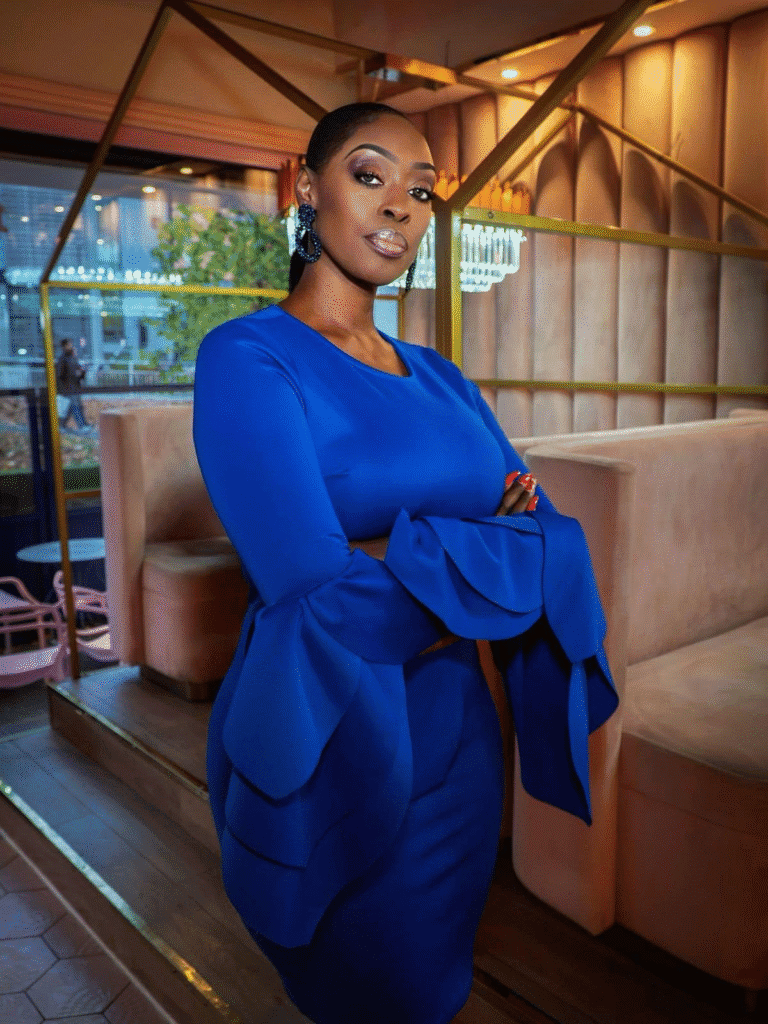
Her forthcoming book expands the AI conversation beyond productivity, disruption, ethics, and automation. Sillah asks what AI may reveal about people shaped by generations of caution around speech. What happens when someone culturally trained to edit themselves meets a tool that expands expression? When those who fear being misunderstood can rehearse and refine their thoughts? And when language becomes more accessible, but permission to use it still has to be reclaimed?
The same tension is emerging inside organizations. AI can expand capability rapidly, giving teams new ways to analyze, create, communicate, automate, and make decisions. But capability does not exist independently of capacity. An organization may have the technology and technical skills while its people are still developing the capacity required to absorb uncertainty, adapt to new expectations, learn and experiment.
This makes AI adoption more than a technology challenge. It is also a human capacity challenge. Leaders must not only implement new tools, but lead people through uncertainty, build trust around change, and recognize when teams are being asked to absorb more change than they can sustainably hold.
Sillah’s podcast, Speak with Dilys: The Person Behind The Title, also reflects this belief. Titles can impress, but they can also conceal. Behind every professional identity is a person with a story, a nervous system, a culture, a loss, a longing, and a private relationship with voice. By looking beneath the title, Sillah returns communication to its human center. She asks not only what people want to say, but who they had to become in order to say it.
Today, that range makes Dilys Sillah difficult to categorize and even more difficult to ignore. She is a Human Development Practitioner and Communication Specialist first, and everything else, her books, her speaking, her broadcasting, her frameworks, and the executive leadership coaching she offers, flows from that same foundation: an interest in the capacity people possess before life intervenes, and what stands in the way of that capacity being fully expressed. Her authority comes from the integration of those roles. She brings academic rigor, lived experience, emotional intelligence, and intellectual originality to questions that many industries treat separately.
For leaders, founders, professionals, and communities navigating visibility in the age of AI, Sillah offers a different starting point. Do not begin with the algorithm. Begin with the voice. Do not begin with performance. Begin with capacity.
The promise of her work is neither noise nor self-display. It is a steadier kind of freedom: the ability to speak from a place that is restored rather than reactive, grounded rather than performative, and whole rather than hidden. For organizations, it is also an invitation to recognize that capability is ultimately shaped by human capacity.
For those ready to explore communication, healing, leadership, and AI through a deeply human lens, Dilys Sillah’s books, coaching programs, podcast, and forthcoming 2027 work offer a clear path into a conversation that is only becoming more important.
Explore More About Dilys Sillah
Connect with Dilys Sillah, LinkedIn, Facebook, Instagram, and TikTok.