
2026 Nobel Prize In Chemistry Honors Henri Kagan And Kenso Soai For Landmark Molecular Discoveries
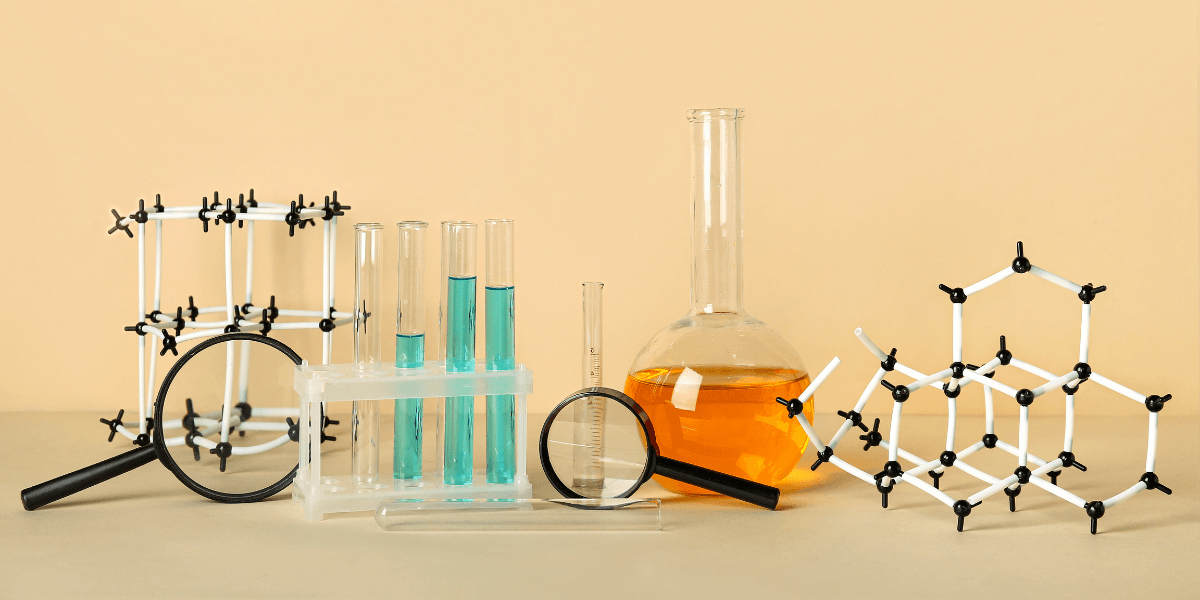
The 2026 Nobel Prize in Chemistry recognizes two scientists whose discoveries transformed how researchers understand and control molecules.
A major scientific achievement received international recognition on Wednesday, October 7, 2026, when the Royal Swedish Academy of Sciences announced that Henri B. Kagan of France and Kenso Soai of Japan had won the 2026 Nobel Prize in Chemistry. Their discoveries helped explain how chemical reactions can favor one molecular form over its mirror image, a question that has challenged scientists for generations. The announcement also drew attention from the American scientific community, where research into molecular structures plays an important role in chemistry, biotechnology, and materials science.
Why The 2026 Nobel Prize In Chemistry Matters
The two researchers received the award for their discoveries involving nonlinear effects and autocatalysis in asymmetric organic synthesis. Although the scientific terminology is complex, the underlying principle concerns a surprisingly familiar concept: the difference between left and right hands.
Just as human hands resemble each other but cannot be perfectly superimposed, certain molecules exist in two distinct mirror image forms. Scientists describe this property as chirality.
Understanding molecular chirality is essential because different forms of the same molecule can interact differently with other substances. The ability to produce a specific molecular form has become an important goal in modern chemistry.
The Nobel committee recognized Kagan and Soai for advancing scientists' understanding of how these differences arise and how chemical reactions can favor one form over another.
Two Scientists Who Changed Molecular Chemistry
Henri B. Kagan, associated with Paris Saclay University in France, helped establish important principles of asymmetric synthesis during the 1980s.
His research demonstrated that small differences in the composition of catalysts could produce unexpectedly large differences in the resulting molecules. This discovery challenged earlier assumptions about how chemical reactions behave.
Kenso Soai, a researcher at Tokyo University of Science, made another important contribution in 1990. His work demonstrated a chemical reaction capable of amplifying its own molecular preference through a process known as asymmetric autocatalysis.
In such reactions, a product can help accelerate the formation of more molecules with the same structural orientation.
Together, their discoveries provided scientists with new ways to understand molecular selectivity and investigate the chemical processes that produce particular molecular structures.
American Scientific Community Recognizes The Achievement
Although neither laureate is based in the United States, the announcement attracted attention from American scientific organizations.
The American Chemical Society, headquartered in Washington, D.C., congratulated both researchers following the announcement.
Society President Rigoberto Hernandez highlighted the importance of their work in understanding and controlling molecular handedness.
The recognition reflects the international nature of modern scientific research. Discoveries made in laboratories abroad frequently influence experiments, educational programs, and scientific development in the United States.
American universities and research institutions continue to study asymmetric chemistry because it provides important insights into chemical synthesis and molecular interactions.
The award also highlights the value of fundamental research. Scientific discoveries do not always produce immediate commercial applications, but they can establish principles that influence future technological development.
Understanding The Scientific Importance Of Molecular Handedness
Molecular handedness is a fundamental characteristic of many substances found in nature.
Certain biological molecules, including amino acids and sugars, exhibit specific structural orientations. Understanding why these patterns occur has remained an important scientific question.
The discoveries recognized by the 2026 Nobel Prize provide insight into how a small preference for one molecular orientation can become amplified during a chemical reaction.
This knowledge has implications for organic chemistry, molecular engineering, and the development of methods for producing precisely structured compounds.
However, the Nobel announcement does not represent the introduction of a new consumer product or an approved medical treatment. Instead, it honors foundational discoveries that have helped scientists better understand chemical behavior.
That distinction is important for readers seeking to understand the practical significance of the award without overstating its immediate applications.
Nobel Prize Announcement Highlights Decades Of Research
The 2026 Nobel Prize in Chemistry includes an award of 12 million Swedish kronor, approximately $1.2 million, which the two scientists will share equally.
The official Nobel Prize ceremony is scheduled for December 10 in Stockholm, Sweden, continuing the annual tradition of recognizing achievements in science and other fields.
The announcement also demonstrates that major scientific advances often emerge through decades of careful experimentation.
Kagan's discoveries in the 1980s and Soai's subsequent research helped establish principles that remain relevant to chemistry today.
Their recognition underscores the importance of patience, international cooperation, and sustained investment in scientific knowledge.
What Readers Can Take Away From The 2026 Nobel Prize
The October 7 announcement offers an important reminder that some of the most influential scientific discoveries begin with questions about ordinary natural phenomena.
For students, educators, and researchers across the United States, the 2026 Nobel Prize in Chemistry provides a compelling example of how basic research can reshape scientific understanding.
Kagan and Soai demonstrated that small molecular differences can have significant consequences for chemical reactions.
Their work continues to influence how scientists investigate molecular structures and develop new experimental methods.
The lasting significance of the award lies not only in honoring two accomplished researchers but also in recognizing discoveries that expanded the possibilities of modern chemistry.

NY Review Contributor
Covers New York and national affairs, from City Hall to the neighbourhoods the decisions land in.
This article features partner, contributor, or branded content from a third party. Members of the NY Review editorial staff were not involved in the creation of this content. All views and opinions are those of the contributor alone.
You May Also Like

Where AI Meets Finance: David Villalobos

Erawan Thai Cuisine Redefines Bayside Thai Dining

Ghina Makari Cane Introduces Let’s Learn Numbers and Counting with Tractors, Diggers and Trucks

IT Intelligent Treatment Brings A New Vision Of Regenerative Aesthetics To New York With SomaCell®

How Heather Falk Built The Diamond Standard Coaching to Turn Clarity Into Meaningful Growth