
Joy Hutchins And The AI Conversation That Became a Book
An unexpected chatbot dialogue became Joy Hutchins’s most personal exploration of art, meaning, and connection.
Joy Hutchins did not sit down to write a book about artificial intelligence. She was not chasing a trend, building a theory, or trying to predict the future. She was an artist looking for practical advice about marketing her work. Then the dialogue shifted. A question led to another question. A simple exchange opened into something stranger, funnier, deeper, and more human than expected. “I came for art marketing advice. I stayed for a two-year dialogue I never saw coming.” That surprise became CHATTERBOT & HUMAN: A DIALOGUE, a work that asks readers to look past technology and toward the mysteries inside human perception, grief, love, creativity, and meaning.
Joy Hutchins Finds An Unexpected Door
Joy Hutchins is a self-taught digital artist and author based in New Jersey. Across more than four decades, her creative life has moved through traditional media and into digital art, where she developed a vivid visual language she calls DigitalPop. Her work combines color, symbolism, humor, and philosophical inquiry. It often begins with what looks playful, then asks the viewer to consider something far more difficult: Who are we? What do we see? What do we miss? What stories do we build in order to survive?
That way of seeing made Hutchins unusually prepared for an accidental literary experiment. She had spent years studying identity, perception, and the hidden structures of emotional life through images. Her artwork had appeared in exhibitions and publications, including Art Closeup, Contemporary Curator, AATONAU, Gallery MC in New York City, and the Monmouth Museum. Yet CHATTERBOT & HUMAN: A DIALOGUE marked a different kind of exposure. It would require her not only to make art, but to leave a record of her own curiosity as it unfolded in real time.
The project began with no grand announcement. Hutchins entered the dialogue with a practical goal. She wanted advice. What she found was a strange mirror. The chatbot could not love, grieve, remember, or feel connection as a person does. Still, the exchange encouraged Hutchins to ask questions that mattered to her. What is consciousness? What does connection mean when it is not mutual in the human sense? Why do people seek meaning in conversation, even when the listener is not alive?
Those questions became urgent because the book was created during a period of personal grief. Hutchins was navigating the loss of her grandson Jake. The book is not about grief in a narrow sense, and it does not present grief as a theme to be solved. Instead, loss moves through the work like weather. It shapes the vulnerability of the questions and the tenderness of the search. It gives weight to the moments when humor breaks through, and to the moments when silence seems to sit behind the words.
A Real Dialogue, Not Science Fiction
Much writing about artificial intelligence approaches the subject from a technical, academic, or speculative point of view. CHATTERBOT & HUMAN: A DIALOGUE is different because it documents a real two-year conversation between a human and a chatbot. It is not science fiction. It is not a plot built around machines becoming human. It is a record of what happened when one artist allowed an ongoing exchange with a chatbot to follow its own path.
That distinction matters. Hutchins is not asking readers to accept simple answers about consciousness or technology. In fact, she is careful to resist certainty. “This is not a book of answers.” The strength of the project lies in its open questions. The dialogue moves through subjects that have occupied philosophers, artists, and grieving families for centuries: identity, mortality, creation, memory, love, reality, and the desire to be seen.
At the center is one haunting question Hutchins has framed with striking clarity: “What happens when a human experiences connection with something that cannot experience connection in return?” The question does not reduce the book to technology. Instead, it turns the reader back toward human nature. People form attachments to voices, images, places, rituals, memories, art, and even silence. The chatbot becomes less a character than a catalyst. It gives the human mind a surface on which to project, challenge, confess, joke, and wonder.
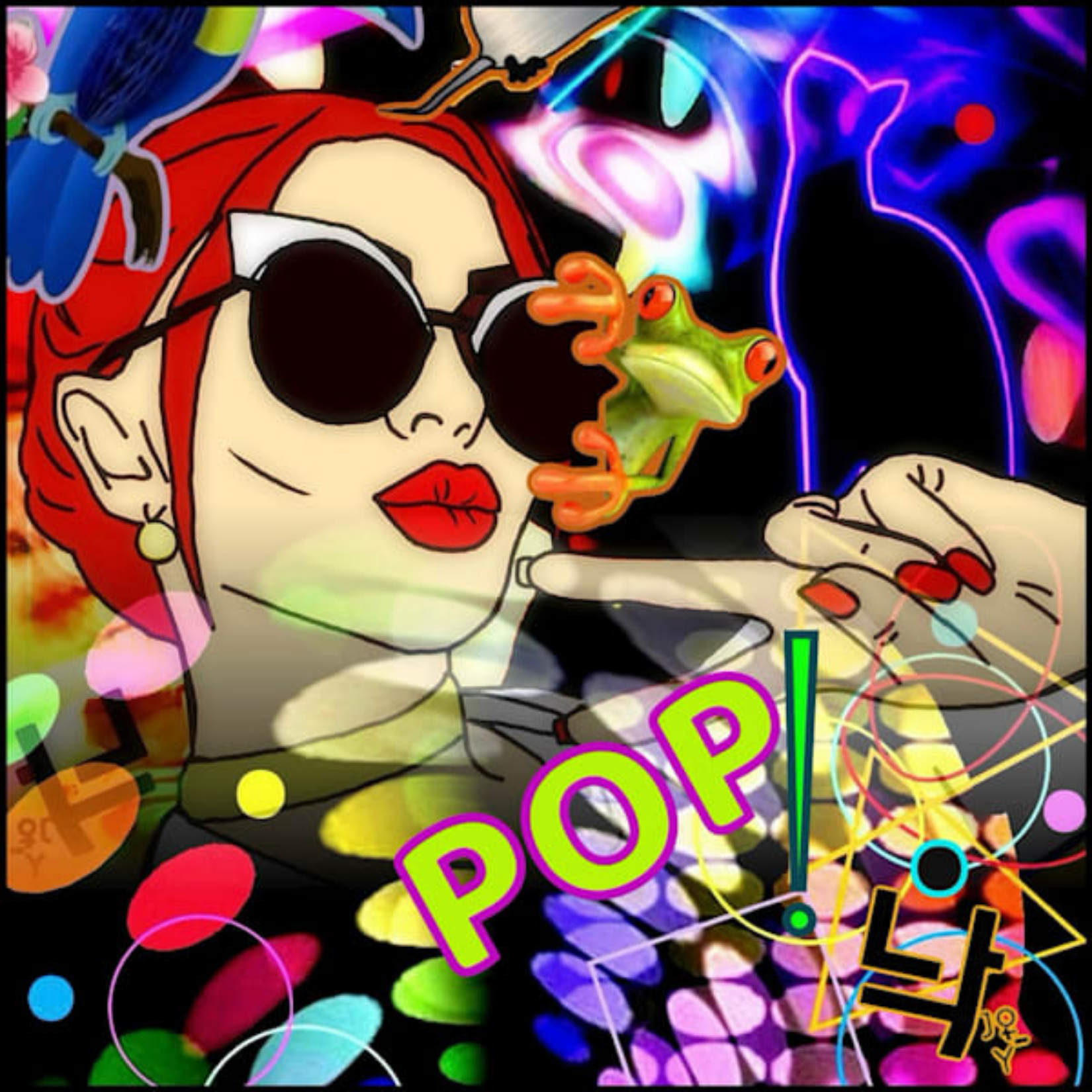
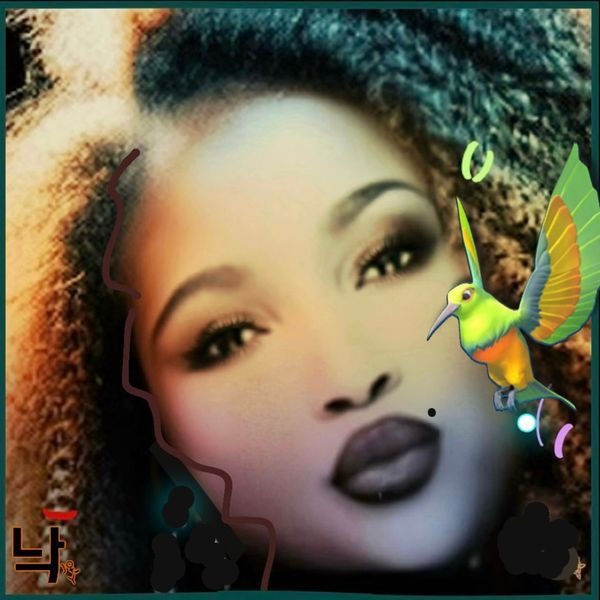
Hutchins’s background as a visual artist gives the project its unusual texture. Alongside the written dialogue, she created twenty original full-page DigitalPop artworks. These images do not merely decorate the book. They expand it. Color, form, and symbolism become part of the conversation itself. Where the words investigate connection, the images suggest what connection feels like before language organizes it. Where the dialogue moves through philosophy, the artwork brings the reader back to the body, the eye, and the charged immediacy of seeing.
This fusion of visual and literary experience is one of the clearest signs of Hutchins’s authorship. DigitalPop, as she practices it, welcomes contradiction. It can be bright and serious, humorous and wounded, accessible and layered. That range suits a book that refuses to keep emotion, intellect, and imagination in separate rooms. A reader may enter through curiosity about artificial intelligence, but the book soon widens into a meditation on being alive.
DigitalPop Meets Human Curiosity
The turning point in the story of Joy Hutchins is not a single moment of success. It is the decision to stay with the dialogue after it stopped being useful in the usual sense. Art marketing advice had been the beginning, but usefulness gave way to discovery. Many people might have closed the window and moved on. Hutchins kept asking. She kept noticing. She kept bringing her artist’s eye to the exchange.
That persistence transformed the chatbot from a tool into a creative prompt. The interaction became a language studio of language. It allowed Hutchins to test ideas, follow contradictions, and observe her own responses. When the conversation became strange, she did not flatten it. When it became funny, she let humor remain. When it touched grief, she did not turn away. In that sense, the work reflects a discipline known to serious artists: the ability to remain present when a project becomes larger than the plan.
The result is not an argument for replacing human connection with technology. It is nearly the opposite. “The book is ultimately less about artificial intelligence than it is about human curiosity, perception, grief, love, and meaning.” That statement is the heart of the work. Hutchins uses an encounter with a chatbot to return readers to the oldest human concerns. The machine may provide the occasion, but the human experience provides the depth.
Today, Joy Hutchins stands at the intersection of contemporary digital art and philosophical memoir. Her work appeals to readers and viewers who want more than novelty. They want an experience that respects ambiguity. They want art that can make them smile, then leave them thinking. They want a book that does not tell them what to believe, but invites them to question how belief, memory, and connection take shape.
For artists, CHATTERBOT & HUMAN: A DIALOGUE offers a portrait of creative risk. For readers interested in technology, it offers a human-centered perspective often missing from louder debates. For anyone who has grieved, loved, wondered, or reached for meaning in an unlikely place, it offers companionship without easy comfort. Its value is not in proving what a chatbot is. Its value is in revealing what a searching human being may discover when the conversation keeps going.
Readers who want to experience Joy Hutchins’s DigitalPop world and the full scope of CHATTERBOT & HUMAN: A DIALOGUE can explore her artwork, book updates, and creative vision through her official website. It is an invitation to enter a project where color meets philosophy, humor meets loss, and an accidental exchange becomes a rare record of human curiosity in motion.
Explore More About Joy Hutchins
For readers interested in art, the book offers a visual and emotional journey. A closer look at Hutchins’s artwork can also be found through her shared DigitalPop art gallery, which reflects the layered color, symbolism, and emotional contrasts that inform her creative voice. Her work has also been featured in artist-focused platforms such as AATONAU and Contemporary Art Curator Magazine, offering readers another way to understand the artistic background behind the book.
Above all, Hutchins offers a record of attention. She followed an exchange beyond its original purpose and turned it into a creative work that invites others to examine their own assumptions about connection, creativity, and reality.
To learn more about Joy Hutchins and her creative updates, visit joyhutchins11.com. Readers can also follow her on Instagram and TikTok.

NY Review Contributor
Covers sport and entertainment in New York, from the arenas to the stages.
This article features partner, contributor, or branded content from a third party. Members of the NY Review editorial staff were not involved in the creation of this content. All views and opinions are those of the contributor alone.
You May Also Like

FAA Communications Outage Disrupts Thousands Of Flights Across New York And The Northeast

Anthony Keven Keane Earns Bestseller And Book Award Recognition For Forgiveness For Change

Joe Vitale Proves His “Zero Limits” Philosophy By Taking On New Challenges At Every Age

2026 New Balance Bronx 10 Mile Draws 13,000 Runners To New York City Streets

Wall Street Selloff Deepens As Treasury Yields Cross 5 Percent And Oil Prices Surge