

Michael J. Cooper blends medicine, history, and empathy to share human stories that span time and experience.
Some writers come to history through archives; Cooper came to it through hospital corridors, border crossings, and conversations that lingered long after the day’s work was done. For four decades, he built a career as a pediatric cardiologist in Northern California, caring for children with complex heart conditions–both in the US and in Israel & Palestine. Running alongside that life in medicine was another vocation: listening. Listening to patients, colleagues, and the people whose stories would later inform his novels.
That habit of attention, more than ideology or politics, became the engine of his historical fiction. Cooper’s work demonstrates that understanding human experience often requires patience, empathy, and the willingness to sit with complexity.
A City That Teaches You to Look Again
Cooper first visited Jerusalem as a teenager in 1966, when the city was divided between Israel and the Hashemite Kingdom of Jordan. Like many young people from abroad, he arrived with preconceived notions of the region and its history. Over time, he realized that the most profound divisions were not only the physical ones, but those that were inherited, borne in the blood, and carried through memory, language, and faith.
He eventually studied biology at Hebrew University and later medicine at Tel Aviv University. Along the way, he worked as a teacher, musician, and performer, placing him in the midst of everyday life where personal stories emerged more freely than official narratives. Friendships formed across cultural lines, with shared meals, music, and conversations revealing experiences that statistics or textbooks could never convey.
The Doctor Who Kept Returning
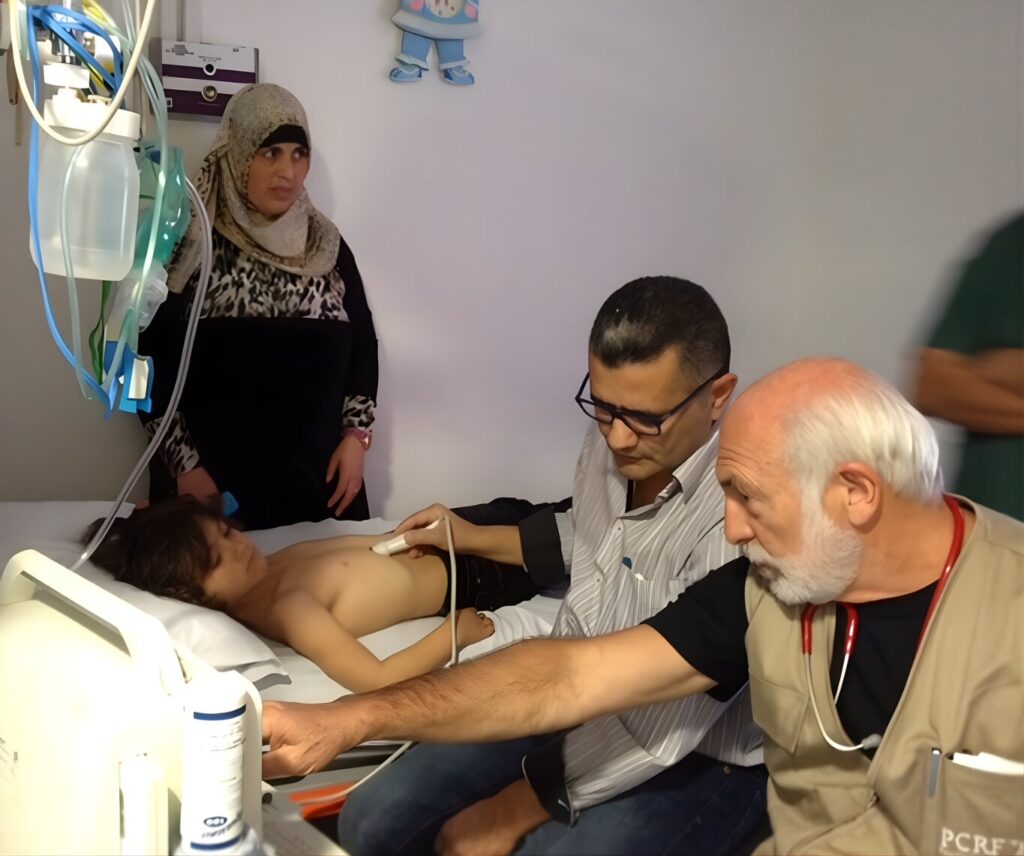
After completing medical training, Cooper returned to the United States for specialty training in pediatrics and pediatric cardiology. Yet he continued traveling regularly for medical missions– now numbering twenty-seven–helping children in Palestine with limited access to care. These experiences were technically demanding, emotionally intense, and profoundly humanizing. Cooper observed firsthand how history lives inside families and bodies, sharpening his ability to write with restraint, nuance, and authenticity.
When Fiction Became Necessary
For the first twenty years of his medical career, Cooper’s writing focused on scientific and clinical work. The shift toward fiction emerged after the 1995 assassination of Israeli Prime Minister Yitzchak Rabin–a moment that marked the death of the peace process–a moment that underscored the imperative and the fragility of hope.
His debut novel, Foxes in the Vineyard, set in 1948 Jerusalem, immerses readers in a world of shifting loyalties and moral uncertainty. Its acclaim stems not just from plot, but from its measured, human tone, showing readers what it feels like to live within history when choices are rarely simple. Through the development of complete historical and fictional characters, Cooper weaves his stories within the scaffolding of historical time lines inviting readers to witness lived experience and to experience moments of conflict and coexistence.
Stories That Travel Through Time
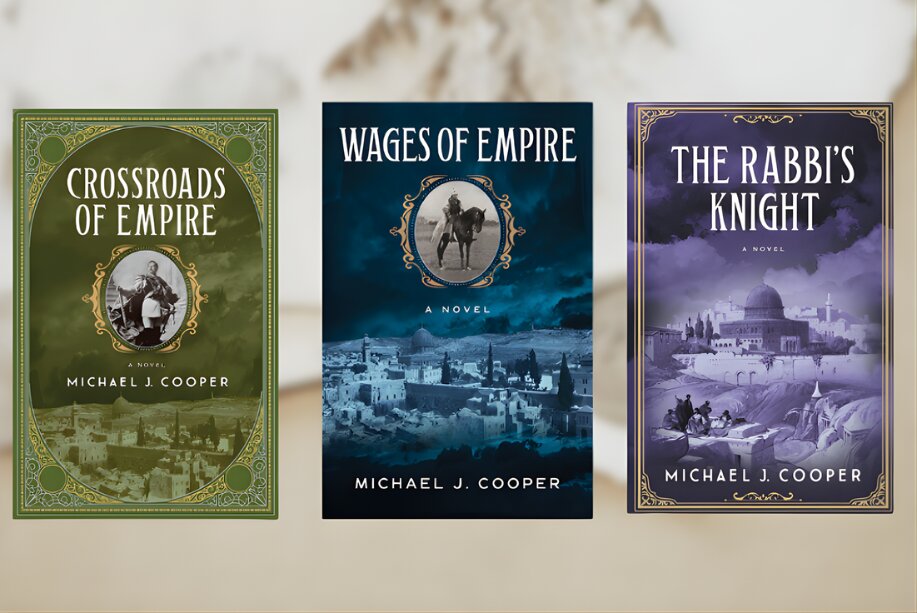
Cooper’s subsequent novels continue this approach. Wages of Empire follows a young protagonist through World War I, tracing how global forces intersect with individual lives. Its sequel, Crossroads of Empire, returns readers to Jerusalem, exploring memory, mystery, and inherited experience. Cooper’s most recent work, The Rabbi’s Knight, set at the twilight of the Crusades in the year 1290, examines cooperation, faith, and shared purpose across historical divides. Cooper’s novels are a growing series, anchored at major historical turning points and connected by the mystery and beauty of Jerusalem, and by the Sinclair/St. Clair blood line.
The Quiet Power of Not Knowing
What sets Cooper apart is not only meticulous research, but also temperament. His characters stumble through history, misunderstand each other, make compromises, and carry loyalties that defy simple categorization. This sensibility reflects a life spent moving between worlds, clinic and classroom, science and storytelling. Cooper writes with attention, humility, and compassion. The result is historical fiction that is thoughtful, humane, and genuinely engaging.
For more information, updates, and reflections from Michael J. Cooper, visit: