Forgotten No More: New Book Reveals Incredible Story of Australian Explorer
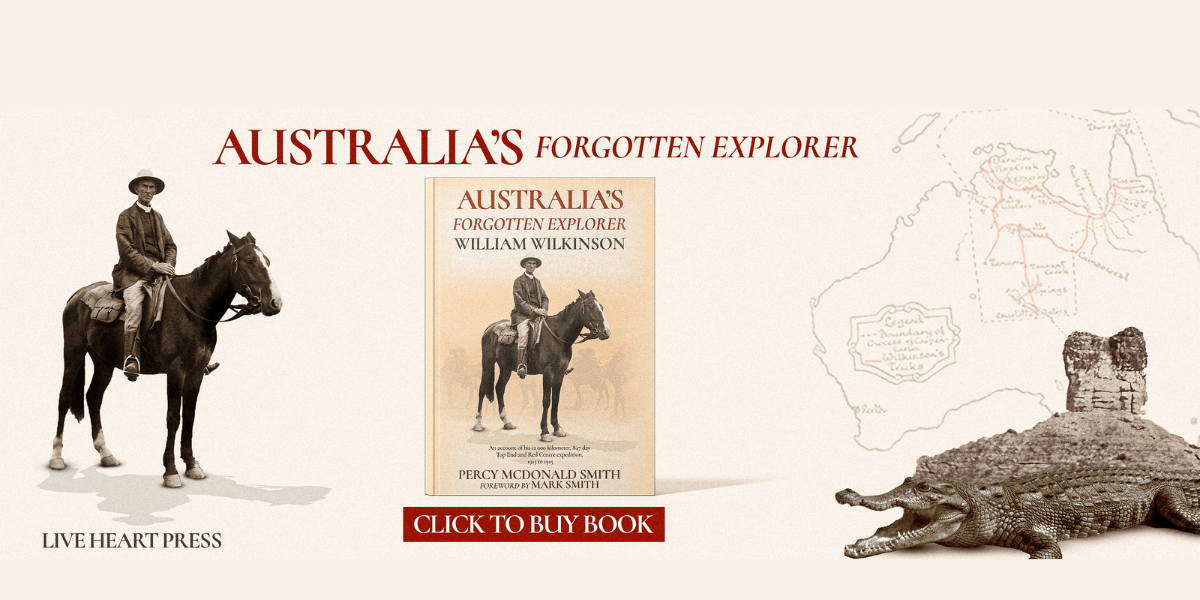
Photo Credit: Live Heart Press
James Cook, John McDouall Stuart, and Burke and Wills are among the most celebrated names in Australian exploration. Yet history has largely overlooked a man who embodied the same courage, resilience, and pioneering spirit. William Wilkinson, with little more than his hat, horse, saddle, and unwavering determination, traversed some of the harshest landscapes in the country. Unlike many of his famous contemporaries, however, Wilkinson was driven not by the pursuit of glory or conquest, but by a profound commitment to serving others.
Australia’s Forgotten Explorer is a compelling account of courage, endurance, faith, and devotion across the Australian outback. Originally written in 1947 by pioneering outback priest Percy Smith MBE under the title The Strenuous Saint, the book recounts the extraordinary journey of William Wilkinson, an Anglican priest who travelled more than 12,000 kilometres on horseback through some of Australia’s harshest and most isolated regions between 1913 and 1915.
Wilkinson’s route carried him from north-west Queensland through the Gulf of Carpentaria, Katherine, Tennant Creek, the Tanami Desert, Charlotte Waters, and Hermannsburg, where he met missionary and anthropologist Carl Strehlow. His travels unfolded during the outbreak of the First World War, a conflict that would bring personal tragedy with the death of his youngest son in Belgium. His remarkable expedition lasted 847 days.
Travelling with sixteen horses and two Indigenous guides, Wilkinson reached many important landmarks, including Chambers Pillar, Attack Creek, Central Mount Stuart, and the Devil’s Marbles. Much of the journey followed the path previously forged by explorer John McDouall Stuart along the telegraph line.
The depth of Wilkinson’s story lies not only in the distance he covered, but in the character of the man himself. Deaf and already in his late fifties, he depended on a brass ear horn to communicate. Still, he pursued his calling with extraordinary resolve. He was more than a clergyman. He was a bushman, blacksmith, medic, messenger, and counsellor. He shoed his own horses, cared for the sick and injured, delivered mail, helped people write letters and wills, and offered comfort to those living in deep isolation.
The book brings Wilkinson’s hardships vividly to life. He endured intense desert heat, freezing nights, illness, thirst, fatigue, treacherous river crossings, crocodiles, quicksand, and the loss of horses to snakes and disease. He also encountered cultural tensions, crime, and grief, yet continued his work with compassion and determination. These trials reveal the remarkable strength that carried him through both physical hardship and emotional strain.
Wilkinson’s journey opens a window into a lesser-known chapter of Australian history. Through his experiences, readers gain a clearer understanding of remote life in early twentieth-century Australia and the crucial role played by individuals who helped connect isolated communities.
The book is an adventure story and a tribute to quiet, selfless service. This special reprinting, introduced with a foreword by Percy Smith’s grandson, Mark Smith, includes new details about Wilkinson’s early life, including his seven children, along with previously unseen photographs that add greater depth to the narrative. Mark describes Wilkinson as a man “who looked for no praise, sought no reward and received no recognition.” The line captures the humility and dedication that shaped Wilkinson’s legacy.
In an exclusive interview, Mark told the New York Review that he chose to publish the new edition after receiving positive feedback from his South Australia’s History Festival speech, “Home via Hermannsburg: William Wilkinson’s 847 day. Top End. Red Centre Quest,” delivered for the Friends of the Lutheran Archives.
The audience was especially interested in Wilkinson’s five-day visit to the Lutheran mission at Hermannsburg and his meeting with Carl and Freida Strehlow at the Finke River Mission, which occurred as anti-German sentiment was intensifying. The Strehlows were understandably worried about the safety of their children, who had gone to Germany in 1910 for schooling, as the war in Europe grew increasingly violent.
“Shouting into Wilkinson’s brass ear horn, the potential for the Anglicans to take over Lutheran missions became a controversial discussion topic,” Mark said.
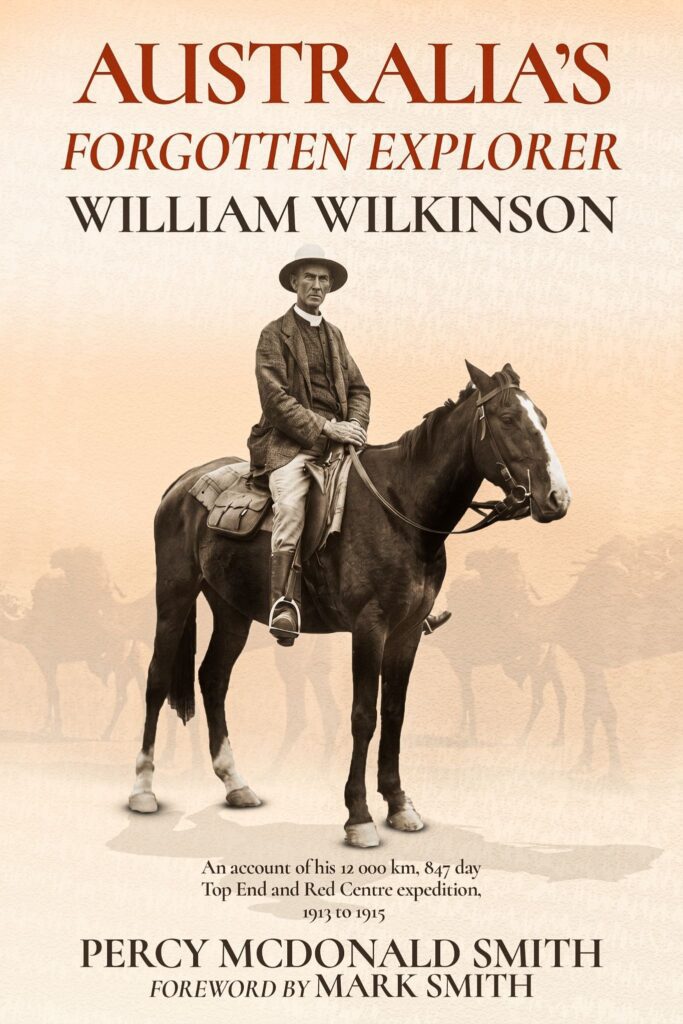
Photo Credit: Live Heart Press
A history graduate from Adelaide University, as well as a filmmaker and writer, Mark studied his grandfather’s work, which was based on original journals, photographs, and papers gathered in the 1940s. The republished edition of The Strenuous Saint also marks one hundred years since Percy Smith’s ordination as a priest in Brisbane in 1927.
Mark said, “One thousand copies of Percy Smith’s book were sold to raise funds for St John Hostel in Alice Springs and St Francis House in Adelaide, which were both places set up by my grandfather to support Indigenous children to access education and find their way in life.” St John’s Hostel and St Francis House later became part of the early lives of Indigenous trailblazers such as Charles Perkins, John Moriarty, and Gordon Briscoe, who achieved university education and emerged as leaders in Australia’s 1960s civil rights movement. Their work echoed the efforts of Dr Martin Luther King Jr., including freedom rides that exposed systemic racism.
The book also features photographs taken by Wilkinson, once believed to have been lost for decades, that carry anthropological value. It further includes a comparative analysis of the shared legacy of Wilkinson, Percy Smith, and champion sprinter turned priest Ken Hampton OAM. Hampton, an Alawa man from Roper River in the Northern Territory, lived at the renowned St Francis House. Wilkinson visited Roper River in 1914.
“Wilkinson has sadly been forgotten in the pages of history, but that would not have mattered to him. When he died in 1935 aged 81, he would have drawn comfort from the fact that his call to Central Australia had finally been answered by Percy Smith in 1933,” Mark said.
Overall, Australia’s Forgotten Explorer is an engaging and inspiring read. It brings together adventure, exploration, history, faith, and human perseverance in a story that deserves renewed attention. Readers interested in Australian history, outback journeys, or the lives of remarkable individuals will find William Wilkinson’s journey both memorable and deeply compelling.
Australia’s Forgotten Explorer: William Wilkinson can be purchased from the Live Heart Press at: www.liveheart.com.au

NY Review Contributor
Covers New York and national affairs, from City Hall to the neighbourhoods the decisions land in.
This article features partner, contributor, or branded content from a third party. Members of the NY Review editorial staff were not involved in the creation of this content. All views and opinions are those of the contributor alone.
You May Also Like
Orlando Castro Turns His Prostate Cancer Recovery Story Into Hope And Support For Others

Why Families Keep Coming Back To Animal Hospital Of Sullivan County

2026 MacArthur Fellows Put American Creativity And Discovery In The National Spotlight

Best Data Entry Solutions for Growing E-commerce Businesses

Brooklyn Book Festival Brings Major Literary Gathering to New York City