
Dr Eva Kroczynski At CSW70: Advancing Global Reporting Systems And Survivor Centered Innovation
Photographer of Virginie Blachere; video by Cody Buesing.
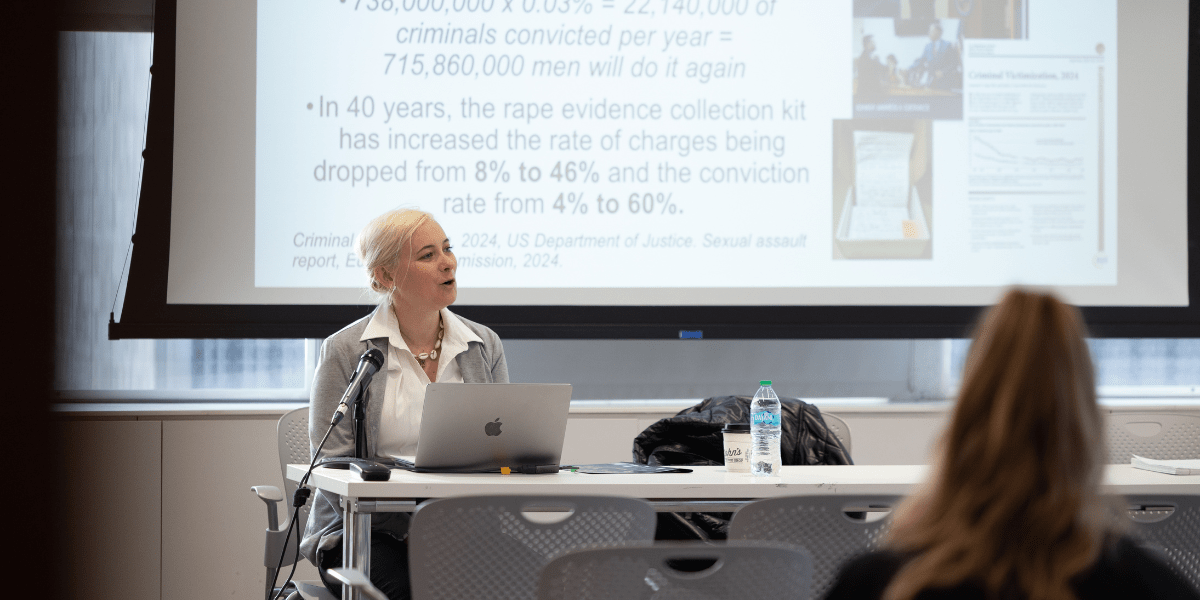
Dr Eva Kroczynski presents global solutions at CSW70, advancing survivor centered reporting systems and transforming access to justice worldwide.
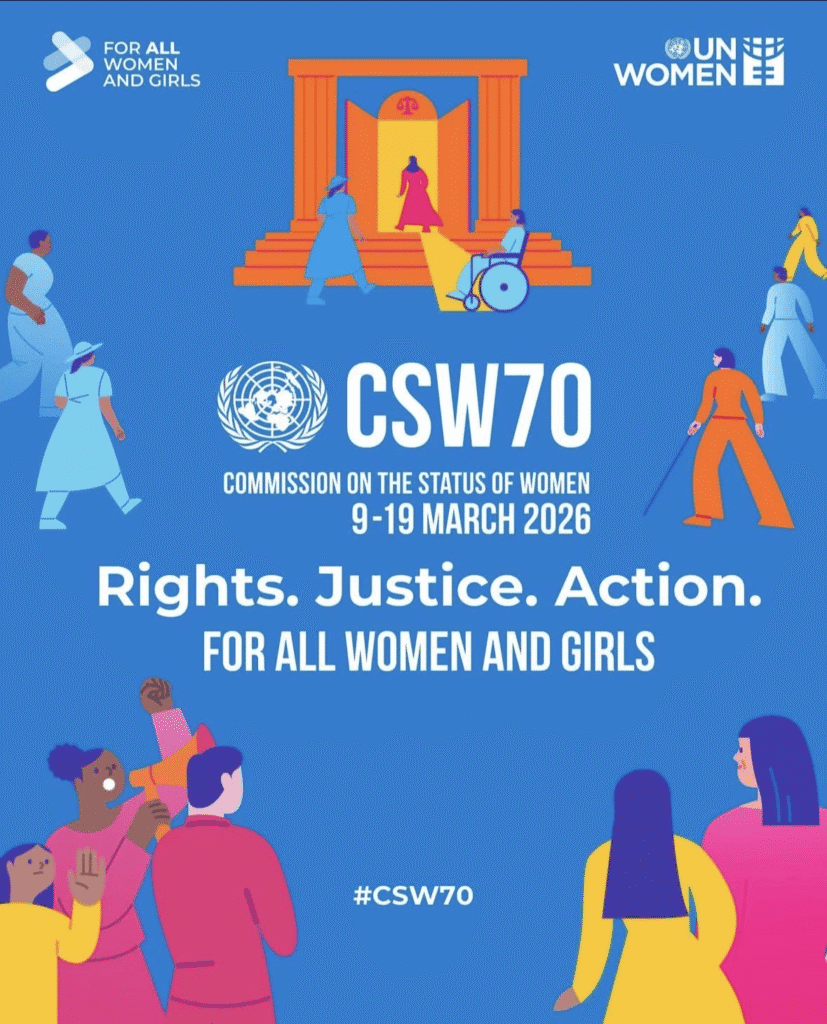
In March 2026, inside the halls of United Nations Headquarters in New York, a different kind of conversation unfolded. Delegates, researchers, and advocates gathered not only to discuss policy, but to confront a quieter issue shaping global justice systems: silence. During the 70th session of the Commission on the Status of Women, known as Commission on the Status of Women, Dr Eva Kroczynski stepped forward with a clear message. The future of reporting systems depends not on more complexity, but on restoring access, clarity, and trust for those who need them most.
Her presentation at a UN Forum parallel event did not rely on abstract theory. It reflected years of fieldwork, research, and direct engagement with survivors navigating fragmented systems. As an Associate Researcher at New York University specializing in rape kits, Dr Kroczynski has built a body of work that challenges long held assumptions about reporting. At CSW70, she brought that work to a global stage.
A Global Platform For Change
The Commission on the Status of Women remains the largest annual gathering dedicated to advancing gender equality. Governments, UN agencies, and accredited organizations convene to shape policies that affect millions of women worldwide. Within this setting, Dr Kroczynski engaged with international stakeholders, including women’s rights delegations and major advocacy groups, positioning her work within a broader movement for systemic reform.
Her focus was precise. Reporting systems are not failing because individuals are unwilling to speak. They are failing because systems are often too complex, inaccessible, or fragmented to support them. By reframing the issue, she shifted attention from questioning individuals to examining institutional design.
From Early Exposure To Global Impact
Dr Kroczynski’s commitment to humanitarian work began long before her academic career. At the age of 14, she started her service as a volunteer with her family to shelters for battered women in the south of France. There, she encountered the realities of violence in a way that statistics could never convey.
She recalls witnessing women whose injuries reflected deep patterns of abuse. Those early experiences shaped her understanding of service. Humanitarian work, she explains, is grounded in humility and consistency. It is not about recognition, but about creating conditions where individuals can rebuild their lives.
This foundation continues to inform her work today. Whether in research institutions or global forums, her approach remains centered on practical solutions that directly impact individuals.
Building Evidence Through Action
Over the past fifteen years, Dr Kroczynski has combined fieldwork with scientific research to address systemic gaps. Through her NGO Consent, she has implemented 17 health programs across 14 countries, focusing on women and children. The results are measurable. More than 8,000 families have significantly improved their living conditions, including housing, education, and employment. In addition, 20,000 individuals have benefited from targeted support programs, while 70,000 individuals have experienced improvements in physical and mental health—bringing the total impact to over 100,000 individuals worldwide.
Her work extends into institutional collaboration. In 2018, at the Institute of Global Health at the University of Geneva, she coordinated a public health program that led to the development of a medical protocol. Approved by the Geneva Ethics Committee and created in collaboration with the World Health Organization in Geneva, this protocol was implemented in local hospitals, setting a precedent for integrating ethical standards with practical care.
These efforts reflect a consistent pattern. Dr Kroczynski does not separate research from application. Each initiative is designed to function within real systems, ensuring that innovation translates into tangible outcomes.
Rethinking The Role Of Rape Kits
A central element of Dr Kroczynski’s work focuses on improving rape kits and the systems surrounding them. While conducting research at New York University in 2022, she collaborated with hospitals in Manhattan to develop a prototype aimed at supporting survivors not only in evidence collection but also in mental health recovery.
This approach expands the traditional understanding of rape kits. Instead of viewing them solely as forensic tools, Dr Kroczynski positions them as part of a broader support system. Her model integrates medical, psychological, and procedural guidance, ensuring that survivors are not left to navigate complex processes alone.
At CSW70, she presented her vision for global implementation of this enhanced system. Central to this vision is a dedicated access platform that allows individuals to document and manage their experiences securely and independently. The initiative is supported by 60 institutional partners and NGOs worldwide, signaling strong international interest in scalable solutions.
Recognition And Validation
In 2026, Dr Kroczynski received the “Best Health Safety Innovation in Sexual Assault Prevention” award from Best of Best Review in the United States. This recognition highlights the growing acknowledgment of her work within both academic and professional communities.
However, the significance of this award extends beyond personal achievement. It reflects a broader shift toward solutions that prioritize accessibility and survivor autonomy. As institutions seek more effective approaches, her work offers a tested and adaptable model.
Why Systems Must Change
One of the most important insights shared during her presentation is that underreporting remains the central issue in global reporting systems. While public discourse often focuses on inaccuracies, research consistently shows that the majority of incidents go unreported.
This gap distorts data and weakens institutional responses. More importantly, it leaves individuals without the support they need. Dr Kroczynski argues that the burden placed on survivors is disproportionate. Complex procedures, unclear guidance, and inconsistent support create barriers that discourage participation.
By simplifying processes and providing independent tools, her approach addresses these barriers directly. It ensures that individuals can document their experiences without relying entirely on institutional timing or availability.
A Vision For Global Implementation
The presentation at CSW70 marked a significant step toward expanding her work internationally. With proven success in multiple regions, the next phase focuses on scaling solutions across Europe and beyond. This expansion requires alignment with international standards while adapting to local regulations, a balance that Dr Kroczynski has consistently achieved throughout her career.
Her vision is not limited to specific countries. It aims to establish a universal framework where reporting systems are accessible, consistent, and fair. In this model, individuals are supported from the moment they choose to document their experience, not only when they enter formal systems.
Changing The Narrative Around Reporting
Perhaps the most impactful aspect of Dr Kroczynski’s work is its ability to shift public perception. By combining data with lived experience, she challenges the narrative that reporting systems are primarily flawed due to inaccuracies.
Instead, she highlights a more pressing issue. Systems often fail to accommodate the realities of those they are designed to serve. When accessibility improves, participation increases. When systems are simplified, trust begins to rebuild.
Her work demonstrates that silence is not an absence of truth. It is often a reflection of systemic barriers. Addressing those barriers is essential for creating more accurate and effective reporting systems.
Science And Humanity In Practice
Dr Kroczynski’s contributions stand at the intersection of scientific rigor and human understanding. Her research is grounded in evidence, yet her solutions are shaped by direct engagement with individuals and communities.
This balance allows her to design systems that are both credible and compassionate. It ensures that innovation does not come at the expense of accessibility, but rather enhances it.
Her presentation at CSW70 reinforced a clear message. Reporting systems must evolve to meet the needs of those they serve. When they do, they become tools of empowerment rather than obstacles.
Explore The Future Of Survivor Centered Reporting
To explore her initiatives, visit the Website and discover how structured documentation can transform the way truth is recorded and shared. Follow ongoing updates and insights through Instagram and Youtube. For academic contributions, her research profile is available via ORCID 0000-0001-6276-4127, and her published work can be accessed through Dykinson Libros.
To learn more about her initiatives and global projects, visit her official website and explore how structured, survivor centered solutions are reshaping reporting systems worldwide.

NY Review Contributor
Covers New York and national affairs, from City Hall to the neighbourhoods the decisions land in.
This article features partner, contributor, or branded content from a third party. Members of the NY Review editorial staff were not involved in the creation of this content. All views and opinions are those of the contributor alone.
You May Also Like

IT Intelligent Treatment Brings A New Vision Of Regenerative Aesthetics To New York With SomaCell®

How Heather Falk Built The Diamond Standard Coaching to Turn Clarity Into Meaningful Growth
The Modern Family Needs a Modern Estate Plan

Chris Anthony Turns Corporate Events Into Lasting Experiences

Behind the Role: Aaron Dancel at Atlantis Trident