
NASA’s New Horizons Resumes Deep-Space Science After Record Hibernation
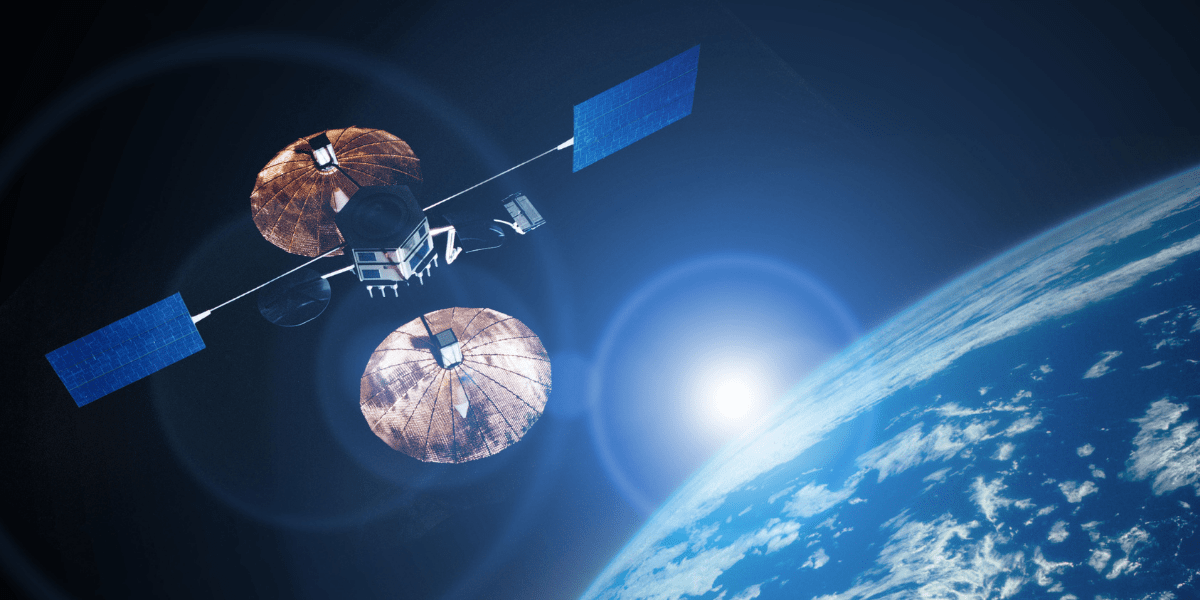
NASA’s New Horizons spacecraft has successfully resumed full operations after emerging from the longest hibernation period in its two-decade mission, marking another milestone in the United States’ ongoing exploration of the outer solar system. The spacecraft’s return to active status, announced this week by NASA, enables scientists to begin receiving new scientific observations collected from one of the most distant operating spacecraft ever launched by humanity.
The achievement highlights the remarkable longevity of the New Horizons mission, which continues to provide valuable data from the Kuiper Belt, a vast region of icy objects beyond Neptune. More than twenty years after its launch and nearly eleven years after its historic flyby of Pluto, the spacecraft remains healthy and capable of conducting scientific research approximately 5.9 billion miles (9.5 billion kilometers) from Earth.
NASA confirmed that New Horizons awakened safely after spending 321 days in a planned hibernation mode. During this period, the spacecraft operated autonomously using commands uploaded months earlier. Mission controllers at the Johns Hopkins Applied Physics Laboratory verified the successful wake-up on June 23, with the spacecraft’s signal taking nearly nine hours to travel back to Earth because of the immense distance involved. The agency publicly highlighted the successful return to operations during the week of July 7, underscoring the spacecraft’s continued reliability in one of the harshest environments ever explored by a robotic mission.
Hibernation is an essential strategy for long-duration deep-space missions. Rather than operating every onboard system continuously, engineers place spacecraft into low-power mode to conserve energy, reduce wear on hardware, and minimize the need for constant oversight from mission controllers. Despite entering hibernation, New Horizons continued gathering certain scientific measurements using instruments designed to monitor the outer heliosphere and the dust environment of the Kuiper Belt.
Now that the spacecraft is fully awake, mission teams will first review engineering and health data before downloading the scientific observations stored onboard during the past several months. NASA expects the spacecraft’s ultraviolet spectrograph and additional scientific instruments to continue studying hydrogen gas in the outer heliosphere, solar wind interactions, energetic particles, and microscopic dust that fills the distant reaches of the solar system. These measurements help scientists better understand how the Sun’s influence changes with distance and how the outer solar system evolved over billions of years.
New Horizons remains one of NASA’s most successful planetary exploration missions. Launched in January 2006, it became the first spacecraft to fly past Pluto in July 2015, revealing a surprisingly active world with mountains, glaciers, plains, and a complex atmosphere. The mission transformed scientific understanding of Pluto, which had previously appeared only as a blurry point of light through telescopes.
The spacecraft later achieved another historic milestone by becoming the first mission to closely examine a Kuiper Belt object when it flew past Arrokoth on January 1, 2019. The encounter provided unprecedented insights into one of the oldest and most primitive objects remaining from the early formation of the solar system. Since then, New Horizons has continued its extended mission, collecting unique observations that cannot be obtained from Earth-based telescopes.
NASA officials also noted that ground systems supporting the mission are receiving software upgrades to improve long-term operations. Engineers have updated the spacecraft’s onboard autonomy software to account for decreasing available power, longer communication delays, and the unique challenges associated with operating at extreme distances from Earth. These improvements are intended to help maximize the scientific return as New Horizons continues traveling farther into interstellar space.
The mission illustrates the value of designing spacecraft capable of operating reliably for decades. Unlike missions in Earth orbit or on nearby planets, New Horizons cannot receive rapid assistance if problems arise. Instead, it depends on carefully programmed autonomous systems that allow it to detect issues, protect itself, and continue carrying out scientific observations while separated from Earth by billions of miles.
For researchers, the spacecraft provides a rare opportunity to directly sample a region of the solar system that remains largely unexplored. The Kuiper Belt contains countless icy bodies believed to preserve clues about the solar system’s earliest history, making each new observation scientifically significant.
The successful return of New Horizons from its longest-ever hibernation demonstrates both the durability of the spacecraft and the careful planning behind NASA’s deep-space exploration efforts. As new data begins arriving over the coming weeks, scientists expect the mission to continue expanding knowledge of the distant frontier beyond Pluto, reinforcing the United States’ leadership in robotic space exploration and providing fresh opportunities to better understand the origins and evolution of our solar system.

NY Review Contributor
Covers New York and national affairs, from City Hall to the neighbourhoods the decisions land in.
This article features partner, contributor, or branded content from a third party. Members of the NY Review editorial staff were not involved in the creation of this content. All views and opinions are those of the contributor alone.
You May Also Like

Why The Blank Space is the Best of New York's Immersive Social Clubs

Chuck Beckett Builds the PJ Steele Thrillers Around a Hero Torn Between Two Instincts

Oklahoma City Technologist Daniel Mueller Is an Elite and Competitive Hacker

Ahriana Platten Rewrites Sacred Menopause

Where AI Meets Finance: David Villalobos