Rick Sørensen Scott: A Patient-Centred Approach to Integrative Pain Care
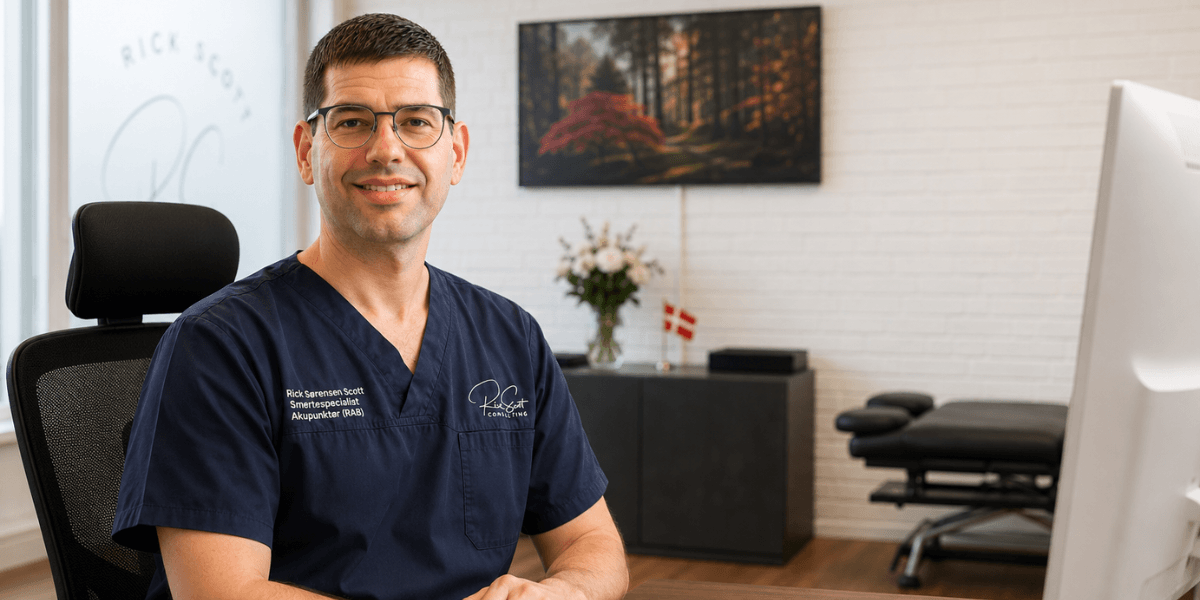
An integrative pain specialist combining multidisciplinary clinical care, patient listening, and research to advance evidence-informed practice.
For more than 20 years, Rick Sørensen Scott has worked with people experiencing persistent and complex pain, developing an approach to care that looks beyond any single treatment method. As an integrative medicine pain specialist, he brings together different areas of his education and clinical experience to understand each patient's individual presentation and determine which approaches may be appropriate.
His work at Rick Scott Consulting in Børkop, Southern Denmark, is grounded in the belief that effective care begins with understanding the person behind the symptoms. Rather than approaching a patient solely through acupuncture, naturopathy, manual therapy, or a diagnosis in isolation, Rick considers how different aspects of a patient's history, symptoms, previous investigations, and everyday life may inform the clinical picture.
That process begins with time.
Starting With the Patient, Not Just the Pain
New patients normally begin with a 90-minute initial consultation at Rick Scott Consulting. The extended appointment gives Rick time to listen carefully to the patient's history, understand how the problem affects everyday life, review what has already been investigated or attempted, carry out an appropriate clinical examination, and explain the reasoning behind a potential treatment strategy.
For people living with persistent or complex pain, that first conversation can be particularly important. Pain may affect sleep, movement, work, relationships, confidence, and ordinary daily activities. Previous attempts at treatment may also have produced limited results or left patients uncertain about what to try next.
Rick's approach therefore places considerable emphasis on understanding the whole presentation before deciding how to proceed.
The objective is not to fit every patient into the same treatment model. Instead, his multidisciplinary background allows him to consider different perspectives and determine which approaches may be relevant to the individual circumstances of the person sitting in front of him.
For Rick, listening is an important part of clinical care. Patients need to feel that their experience has genuinely been heard and understood before meaningful decisions about treatment can be made.
Building a Multidisciplinary Clinical Perspective
Rick's ability to work across different areas of integrative medicine has been shaped by extensive education and professional experience. He has completed more than 19 years of university-level and professional education in the United States and Europe, alongside more than two decades of professional practice.
His education and clinical background encompass acupuncture, naturopathy, manual therapy, and evidence-informed approaches to pain and complex health concerns. In Denmark, he is registered as an acupuncturist, naturopathic medicine practitioner, and medical massage therapist.
Rather than treating these areas as separate disciplines, Rick draws on them as parts of a broader clinical perspective.
This can be particularly relevant when working with persistent pain, where a patient's presentation may not fit neatly into one category. Clinical history, physical findings, previous treatment experiences, and the way symptoms influence everyday life can all contribute to the decision-making process.
That multidisciplinary perspective is central to the identity of Rick Scott Consulting.
The practice is located inside SundhedsCenter Børkop at Ny Boder 8, 7080 Børkop, Denmark. Through the practice, Rick continues to combine individualised clinical care with a commitment to ongoing education and professional development.
More information about Rick's background and professional journey is available through Rick's About page.
From Clinical Questions to Scientific Investigation
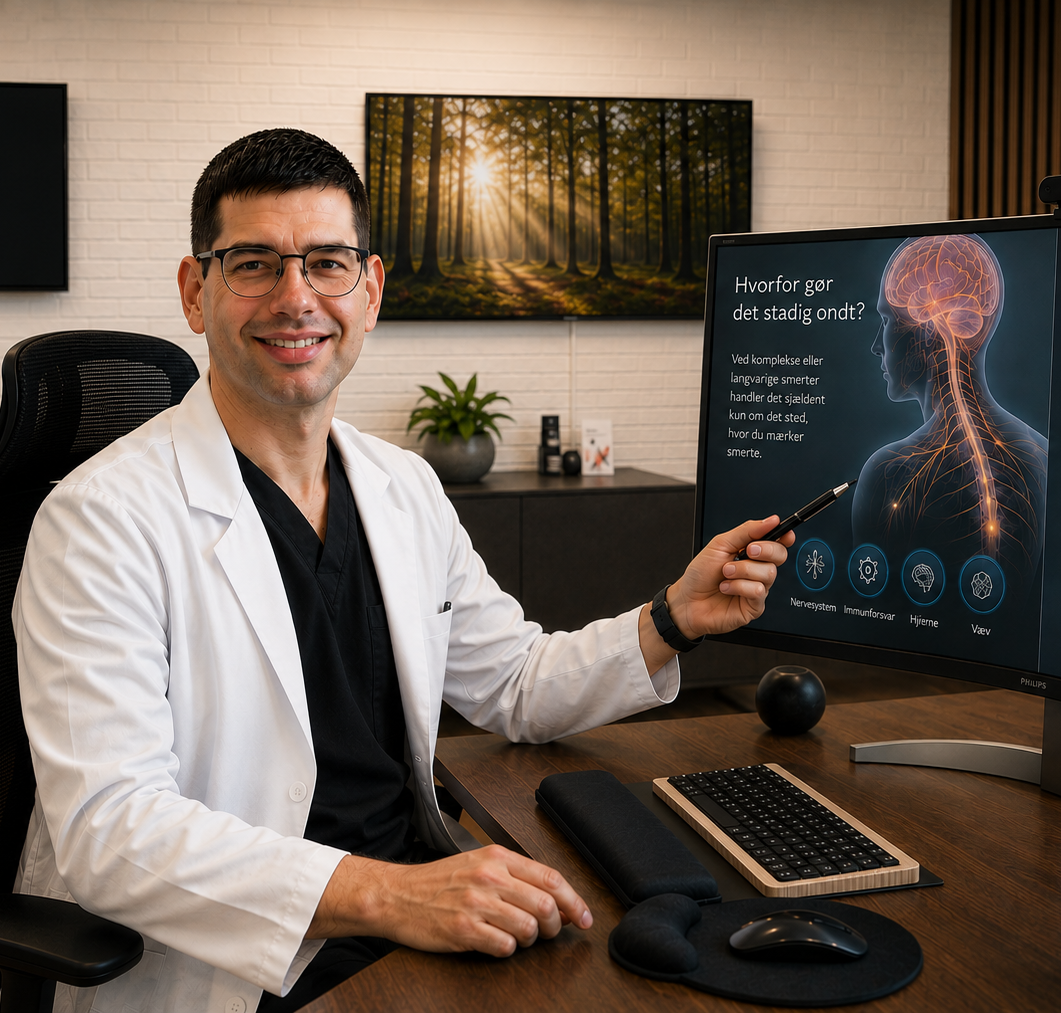
Rick's clinical experience has also raised questions that extend beyond the consulting room.
Over years of working with patients, particular clinical questions can emerge about how an intervention is structured, how it should be documented, how it can be evaluated, and what evidence is needed before broader conclusions can be drawn.
For Rick, this has led naturally from clinical practice into formal scientific research.
One important example is his work examining a structured electroacupuncture intervention for sciatica. Rather than presenting the intervention as a proven solution, his research examines how the approach can be systematically developed, described, and evaluated.
In 2026, Rick's Phase-I research was published in the European Journal of Integrative Medicine under the title, “Examining an electroacupuncture protocol for sciatica: scoping review and case study vignettes.” The paper was coauthored by Rick Sørensen Scott, Ava Lorenc, and Karen Charlesworth.
The research combines a scoping review of existing evidence with clinical case study material and focuses on issues including transparent reporting, replicability, intervention development, and safety. The publication provides a scientific foundation for further investigation rather than presenting a final conclusion about the effectiveness of the intervention.
Readers can view the published research through ScienceDirect.
The relationship between Rick's clinical and academic work is important to understanding the wider trajectory of his career. The research did not emerge separately from his work with patients. Instead, questions developed through long-term clinical experience have progressed into structured scientific investigation and peer-reviewed publication.
Continuing the Research Through PhD Study
That process is now continuing through Rick's academic work as a PhD student undertaking doctoral research in biomedicine through the University of West London.
His current direction includes feasibility research examining the practical application of the electroacupuncture intervention in routine clinical practice in Denmark.
Feasibility research represents an important stage in the development of a clinical intervention. It can examine whether an approach can be delivered consistently, whether its procedures can be clearly documented, and whether appropriate information can be collected in a real-world clinical environment.
For Rick, the research represents a continuation of the same principle that informs his clinical work: careful observation should lead to careful questions, and those questions should be examined through appropriate methods.
His academic work therefore complements rather than replaces his role as a practitioner.
The consulting room remains the foundation of his professional work, while research provides another way of examining questions that arise from clinical experience.
Connecting Experience, Individual Care and Evidence
Rick's professional journey brings together three closely connected areas: extensive multidisciplinary education, more than two decades of clinical experience, and an increasingly formal research programme.
At the centre is patient care.
His work as an integrative medicine pain specialist is based on understanding each patient as an individual rather than reducing complex pain to a single modality or isolated diagnosis. The extended initial consultation, multidisciplinary perspective, and emphasis on listening are practical expressions of that philosophy.
The research then adds another dimension. Clinical questions can be examined systematically, interventions can be described more precisely, and findings can be shared through peer-reviewed scientific publication.
This creates a continuous relationship between practice and inquiry. Experience in the clinic can generate questions for research, while scientific investigation can encourage greater precision in how clinical approaches are developed and evaluated.
Rick's ongoing PhD work at the University of West London represents the next stage of that process.
Learn More About Rick's Work
Rick Sørensen Scott's professional story is ultimately rooted in patient care. His extensive education and more than 20 years of professional experience have shaped a multidisciplinary approach designed to consider the individual rather than rely on one treatment method alone.
That clinical foundation has also provided the questions that have developed into formal research, including his published Phase-I electroacupuncture research and his ongoing PhD feasibility work.
Readers can explore Rick Scott Consulting, review the published European Journal of Integrative Medicine research, or follow his professional and academic work through LinkedIn, Instagram and ResearchGate.
Together, these resources provide a clearer picture of a practitioner whose clinical experience, multidisciplinary education, and scientific inquiry have developed alongside one another, with patient care remaining at the centre of the work.

NY Review Contributor
Covers New York and national affairs, from City Hall to the neighbourhoods the decisions land in.
This article features partner, contributor, or branded content from a third party. Members of the NY Review editorial staff were not involved in the creation of this content. All views and opinions are those of the contributor alone.
You May Also Like

Wall Street Selloff Deepens As Treasury Yields Cross 5 Percent And Oil Prices Surge

RiverWind Vineyard: A Love Story In Rockland

Mets and Yankees Meet in Subway Series Finale With New York Bragging Rights at Stake

Leading with Humanity and Kindness in Human Resources

America Marks 25 Years Since September 11 With Remembrance and Service