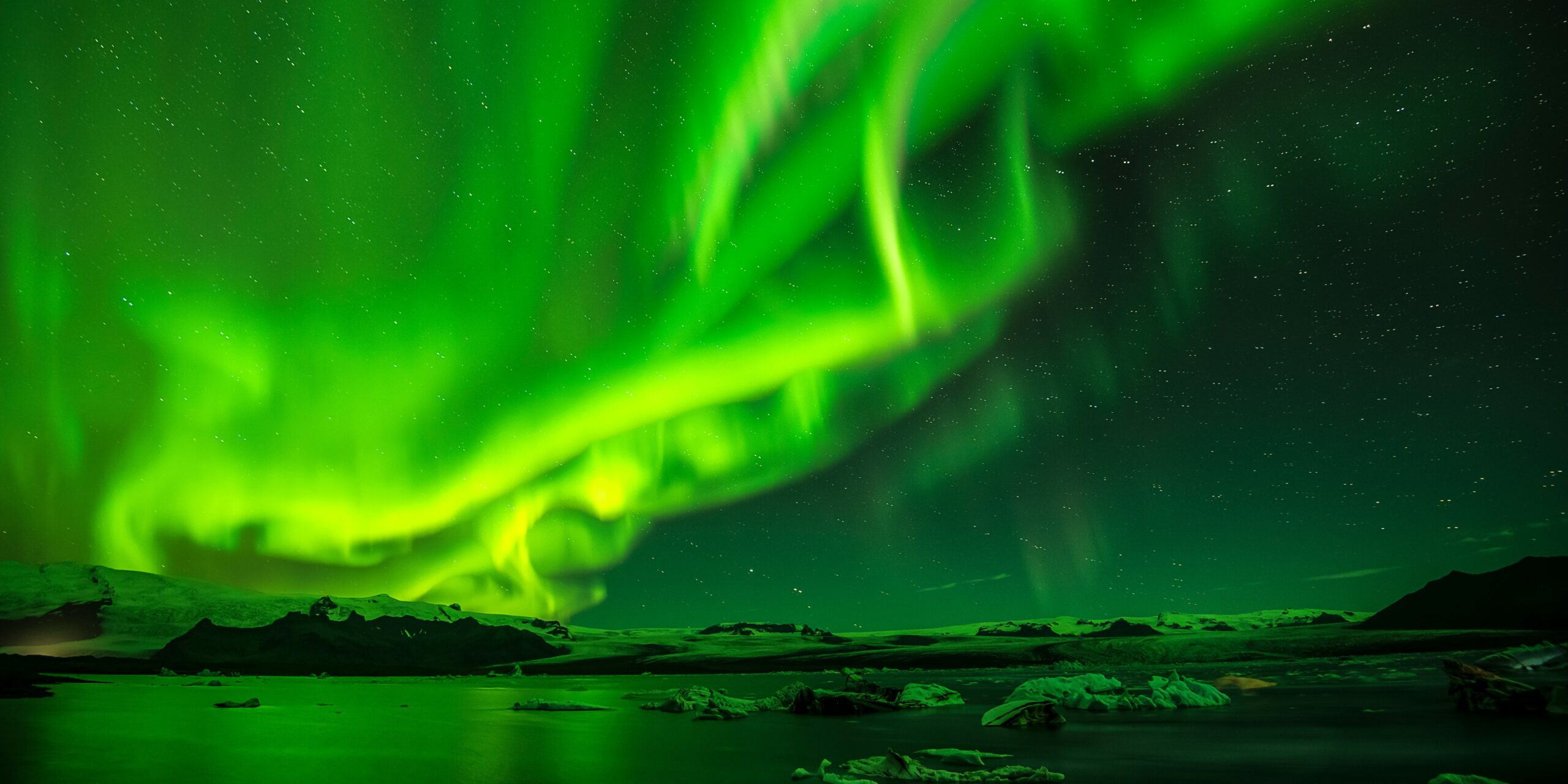
A remarkable celestial event unfolded across much of the United States. The Aurora Borealis, or Northern Lights, typically visible only in the far northern reaches of the globe, made an unexpected and stunning appearance across the continental U.S. The auroras were visible as far south as Florida and Texas, creating an extraordinary opportunity for residents in these regions to witness one of nature’s most mesmerizing phenomena. This rare event followed a series of intense solar flares and coronal mass ejections from the sun, which prompted geomagnetic storm alerts from the NOAA Space Weather Prediction Center. These storms, which were classified as G2 (moderate) and later escalated to G4 (severe), were the driving force behind the vibrant light displays.
The timing of the aurora’s appearance added a unique twist, as it coincided with Veterans Day, a day traditionally dedicated to honoring military veterans across the U.S. While the holiday is typically marked by ceremonies, parades, and community events, the appearance of the aurora added an unexpected and awe-inspiring backdrop to the day’s observances. As communities came together to reflect on the sacrifices of military personnel, they were also united by the shared experience of witnessing the Northern Lights, a beautiful and rare spectacle that seemed to transcend ordinary events.
The Aurora Borealis is usually reserved for locations closer to the Arctic Circle, such as Alaska, northern Canada, and parts of Scandinavia. However, thanks to the powerful solar activity, this year’s geomagnetic storms were so intense that they extended the aurora’s visibility well into the southern U.S., making it visible to millions of people who had never had the chance to see such a phenomenon before. Outdoor publications and travel magazines quickly highlighted the event as one of the best opportunities of the year to view the auroras in lower-latitude locations. In many areas, clear skies and crisp weather conditions further enhanced the visibility, providing the ideal environment for skywatchers to observe the dancing lights and capture them on camera.
For many people, this event represented a once-in-a-lifetime opportunity to experience the Northern Lights without having to travel to the far north. The aurora’s vivid hues—ranging from bright greens to deep reds and purples—streaked across the skies, creating a breathtaking display that drew people outdoors after sunset. Social media platforms were flooded with photos and videos of the aurora, with individuals sharing their excitement about the unexpected sighting. For some, it was a moment of quiet reflection; for others, it was an exhilarating experience, offering a sense of connection to nature and the universe.
Veterans Day, typically a solemn occasion, took on a special significance this year, as the appearance of the aurora seemed to add another layer of meaning to the day. In many communities, local volunteer groups and organizations encouraged people to venture outdoors after sunset to take in the natural light show. Messages urging people to look northward and capture the aurora with cameras became part of the day’s activities. For some, the stunning lights served as a reminder of the larger, awe-inspiring forces at work in the universe, while for others, it was simply a beautiful and unexpected way to celebrate a day of national remembrance.
The scientific explanation behind the appearance of the aurora on such a large scale lies in the solar flares and coronal mass ejections, which are massive bursts of solar wind and magnetic fields. When these charged particles from the sun interact with the Earth’s magnetic field, they create the glowing lights that we know as the Aurora Borealis. While geomagnetic storms are relatively common, the intensity of the G4 alert made this particular display especially vivid and widespread. The heightened activity from the sun’s eruptions allowed the aurora to reach much farther south than usual, making the phenomenon visible to people in parts of the U.S. that are not typically in the aurora zone.
In conclusion, the Northern Lights on Veterans Day 2025 were more than just a stunning natural phenomenon; they became a symbol of shared wonder and a reminder of the beauty that exists in the world around us. The rare occurrence gave people in lower-latitude U.S. locations a chance to experience the awe-inspiring spectacle of the aurora, something they might never have thought possible. With clear skies and heightened geomagnetic activity, the event was one of the best opportunities of the year for aurora-viewing in the southern U.S. As the natural light show unfolded, it provided a moment of unity and awe for those observing, adding a unique and unforgettable dimension to a day already dedicated to honoring the country’s veterans.
Read Also: https://nyreview.com/northern-lights-dazzle-u-s-skies-amid-rare-solar-storm-surge/