
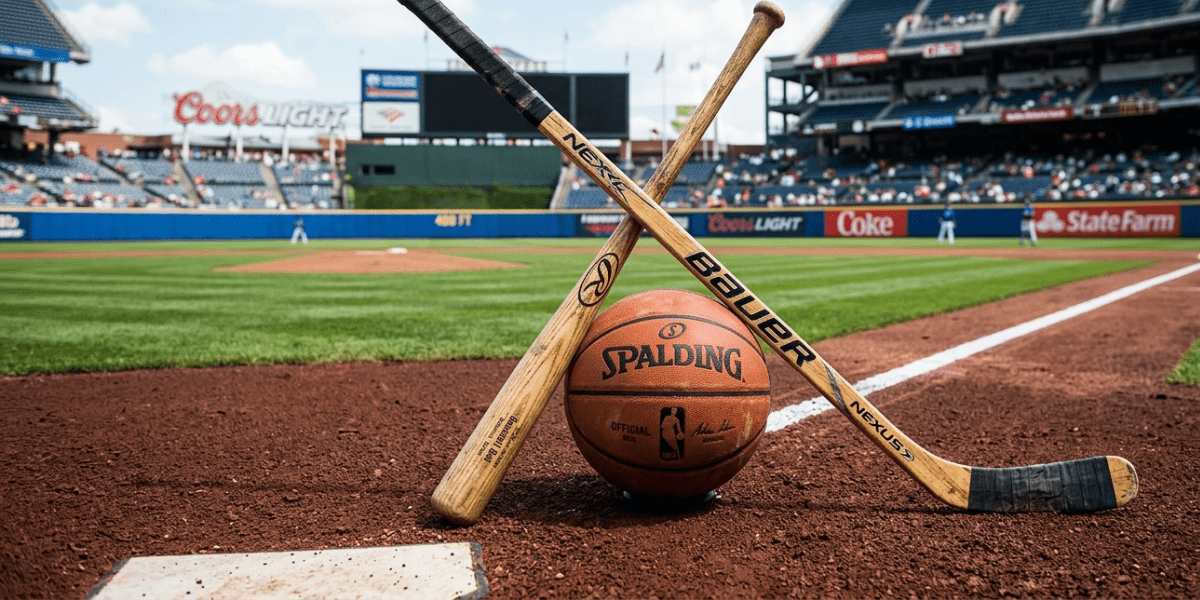
The American sports landscape is in a high-intensity phase as the NBA playoffs, Major League Baseball regular season, and NHL postseason all move deeper into decisive stretches. Across basketball arenas, baseball stadiums, and hockey rinks, teams are increasingly defined by execution under pressure, roster depth, and the ability to adapt to rapidly changing game situations. With championships and playoff positioning on the line, every performance now carries amplified importance.
NBA playoffs shaped by adjustments and star performances
The NBA playoffs have reached a stage where tactical adjustments and individual performances are determining series outcomes. Teams that advanced past the opening rounds are now facing opponents with more refined scouting reports and more disciplined defensive schemes, forcing coaches to rely heavily on in-game adaptability.
A key development has been the emphasis on defensive switching and versatility. Teams with players capable of guarding multiple positions without creating mismatches have consistently gained an advantage. Offensively, half-court execution has become more critical, as defenses tighten and transition opportunities become more limited compared to the regular season.
Star players continue to play a defining role, particularly in late-game situations where isolation scoring and shot creation under pressure often decide close contests. However, supporting casts are also proving essential. Bench production and role-player consistency have emerged as deciding factors in tightly contested series, especially when primary scorers are heavily guarded.
Younger teams have also begun challenging more established contenders, signaling a shift in competitive balance. Athleticism and pace have allowed emerging squads to compete effectively, even against more experienced playoff teams.
MLB season begins separating contenders from early struggles
Major League Baseball is entering a phase where early-season performance trends are starting to reveal team identities. While there is still ample time for adjustments, patterns in pitching depth, offensive consistency, and defensive reliability are becoming increasingly important.
Pitching remains the most significant factor influencing team success. Clubs with strong starting rotations are able to stabilize their performance over long series of games, while bullpen depth is proving essential in protecting late leads. Teams with inconsistent pitching staffs are already facing challenges maintaining momentum, even when their offenses perform well.
Offensively, power hitting continues to dominate statistical categories, but situational hitting is proving just as important. Teams that consistently capitalize on scoring opportunities with runners in scoring position are separating themselves from those that rely heavily on solo home runs. This efficiency-based approach is becoming a key indicator of long-term success.
Defensively, advanced positioning and analytics-driven shifts are playing a noticeable role in game outcomes. Teams that effectively integrate defensive strategy with pitching execution are limiting opponent scoring opportunities and gaining competitive advantages in close games.
NHL playoffs defined by physicality and goaltending
The NHL postseason continues to deliver its signature combination of speed, physical play, and high-pressure drama. As series progress, games are becoming more tightly contested, with smaller margins separating victory from defeat.
Goaltending has emerged as one of the most influential factors in determining playoff success. Strong performances in net have allowed several teams to remain competitive even when outplayed in other areas. Save percentage, rebound control, and composure under sustained pressure are proving decisive in overtime and elimination scenarios.
Defensive structure has also tightened significantly. Teams are focusing on limiting high-danger scoring chances and controlling the neutral zone, forcing opponents into lower-percentage shots. This has resulted in lower-scoring games and increased emphasis on special teams performance, particularly power plays and penalty kills.
Physical endurance is another major factor, as the intensity of consecutive playoff games tests both depth and resilience. Teams with balanced forward lines and reliable third- and fourth-line contributions are better positioned to sustain performance throughout long series.
Broader trends shaping U.S. professional sports
Across all three leagues, several common themes are emerging. Depth is becoming more important than ever, with championship-caliber teams relying on contributions beyond their star players. Injuries and fatigue management are also playing a growing role, as the demands of long seasons require careful rotation strategies.
Analytics continue to influence decision-making at every level, from lineup construction to in-game strategy. While traditional scouting remains important, data-driven insights are increasingly shaping how teams approach both offense and defense.
Mental resilience is also proving critical, particularly in postseason environments where pressure intensifies and mistakes are magnified. Teams that remain composed in high-leverage situations are consistently outperforming those that struggle under pressure.
Outlook for the competitive stretch ahead
As the NBA playoffs progress, MLB season standings begin to stabilize, and NHL teams continue battling through elimination rounds, the competitive intensity across U.S. sports is expected to rise further. Each league is entering a phase where execution, discipline, and depth will determine championship trajectories and playoff survival.
Fans can expect tighter games, more strategic adjustments, and increased reliance on star performances as teams push toward their ultimate seasonal goals.