

Explore the NuCell NOVUS methodology and Albina Fabiani’s medical biophysics model for understanding human biology.
The contradiction was difficult for Albina Fabiani to ignore. Modern healthcare had become more specialized, more segmented, and more fluent in the language of isolated systems. Yet the human body did not behave like a set of separate departments. It functioned as an integrated physical network, shaped by charge, conductivity, communication, and environment. From that tension, the NuCell NOVUS methodology began to take form, not as another category of wellness, technology, or alternative practice, but as an original framework within medical biophysics.
The NuCell NOVUS Methodology Begins With Physics
At the center of NuCell NOVUS is a simple but demanding premise: before biology can be interpreted through symptoms or labels, it must be understood as living matter governed by physical laws. The body carries electrical charge. Tissues conduct signals. Cells respond to their environment. Biological coordination depends on measurable relationships between structure, energy, and communication. For Fabiani, this was not a branding concept. It became the foundation for a new kind of center, one built to study human function at the boundary where physics and biology meet.
“The body is governed by the laws of physics long before it is described by the language of disease,” Albina Fabiani says. That sentence captures the intellectual center of her work. It does not reject conventional medicine, nor does it claim to replace it. Instead, it asks a different question: what if the physical organization of the body deserves its own rigorous method of evaluation? In that question, Fabiani saw the gap that NuCell NOVUS would address.
The NuCell NOVUS methodology was developed around cellular electrophysiology, bioelectric organization, tissue charge, intracellular signaling, and the stability of the cellular environment. Its centers are designed as precisely controlled biophysical settings, where analysis comes before selection and biology determines the next step. The point is not to showcase equipment. It is to create a consistent scientific philosophy that can guide selection, sequence, and interpretation.
Why The NuCell NOVUS Methodology Is Different
That distinction matters because many emerging health-related fields are led by devices, trends, or attention-grabbing claims. NuCell NOVUS moves in the opposite direction. Technologies may be present inside the model, but they do not define it. They are tools within a larger methodology. Every recommendation is meant to follow the individual’s biological profile, not a standardized protocol or a commercial narrative.
This makes the NuCell NOVUS methodology unusual in both structure and ambition. Rather than separating the body into narrow categories, it studies the organism as an electrical and biochemical network. Conductivity, hydroelectric potential, mitochondrial efficiency, field coherence, hemodynamic dynamics, and biological communication are considered as interdependent elements. The result is not a promise of a specific outcome. It is a disciplined way to examine how physical conditions relate to biological function.
The development of this framework required a key decision. Fabiani did not want NuCell NOVUS to be known as a center built around individual devices, procedures, or fashionable terminology. She had seen how quickly technology can take over the conversation, leaving the deeper method behind. So the model was structured with a clear hierarchy. Biology comes first. Evaluation comes next. Technology comes last, and only if it serves the methodology.
That approach has shaped the organization’s identity. Based in Bulgaria, NuCell NOVUS presents itself as a center for medical biophysics focused on the physical organization of living matter. Its work draws on more than 15 years of expertise, more than 50 completed projects, and a professional team of 35 people. Those details give scale to the story, but the more important point is the consistency of the philosophy. The organization is trying to establish a category, not merely operate a center.
Albina Fabiani And A Category Still Taking Shape
Every new category faces a communication problem. If it is too familiar, it is not new. If it is too unfamiliar, it risks being misunderstood. Fabiani’s challenge has been to describe NuCell NOVUS with precision, while avoiding the labels that often flatten complex work. It is not a wellness brand. It is not biohacking. It is not longevity marketing. It is not an alternative medicine concept. Its claim is narrower, more serious, and more difficult: medical biophysics can offer a distinct way to evaluate and support the conditions under which biological systems coordinate.
In practice, that means NuCell NOVUS places weight on mapping, measurement, sequencing, and coherence across the full evaluation process. Its modules and technologies sit inside that structure, but they remain secondary to interpretation. A biophysical field, a thermal environment, photonic exposure, response mapping, or analytical platform has no independent meaning in the NuCell NOVUS model unless it corresponds to the biology of the person being assessed. The methodology decides the role of every tool.
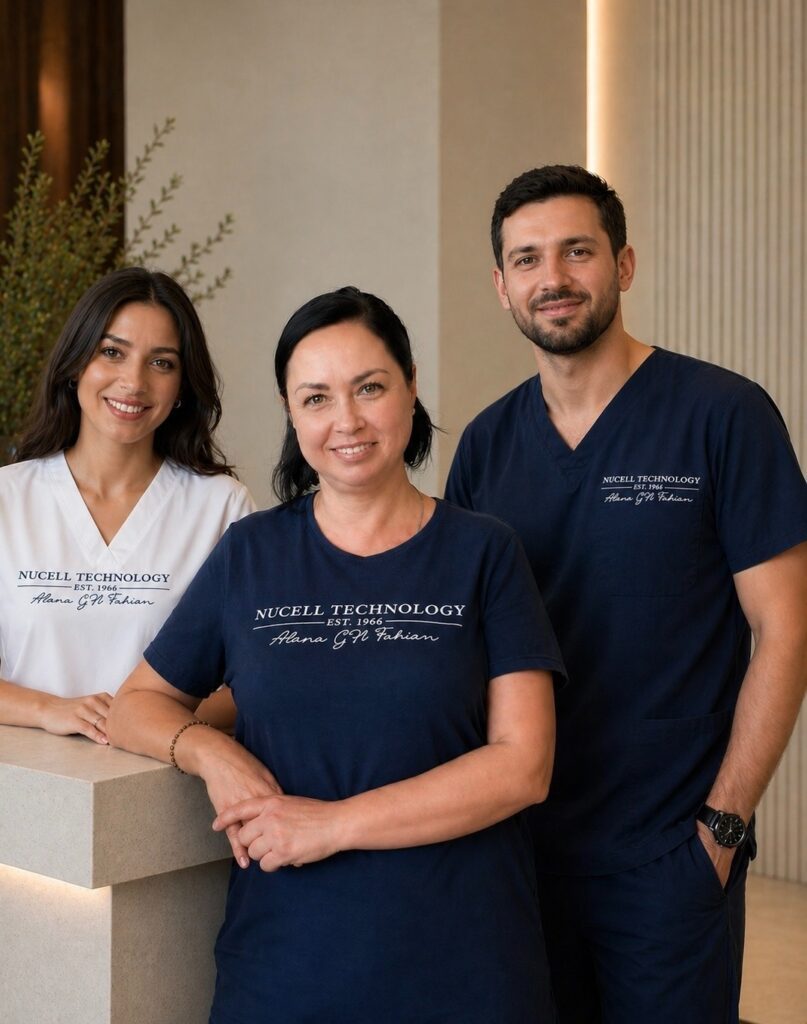
This is where Fabiani’s founder story becomes larger than personal ambition. She is not simply building a business around a technical idea. She is advancing an argument about the future of human health: the next stage will require original methodologies that can integrate physical and biological data without reducing the body to isolated parts. That argument is both scientific and organizational. It requires trained teams, consistent standards, careful language, and a willingness to be evaluated critically.
The international vision follows from that logic. NuCell NOVUS is being positioned as a network of medical biophysics centers built on one philosophy and one methodology. The value of such a network would not come from location count alone. It would come from consistency, from a shared way to evaluate biological function through the lens of physics, and from an operating model that keeps the methodology in control. In fields crowded with promotional claims, that consistency may become the clearest differentiator.
There is also a human dimension beneath the technical language. Fabiani’s work began with dissatisfaction, but not cynicism. She saw a fragmented model and imagined a more integrated one. She saw technologies being promoted as answers and chose instead to ask what question they were meant to serve. She saw the body described through categories and insisted that its physical reality deserved closer attention. That combination of skepticism and construction has shaped the culture of NuCell NOVUS.
For clinicians, researchers, and institutions watching the boundaries of medicine and physics move closer together, the NuCell NOVUS methodology offers a case study in category creation. Its significance is not that it provides simple answers. It proposes a more disciplined question: how should human biological function be evaluated when the body is understood as an integrated electrical and biological system? Those interested are welcome to explore the scientific philosophy, the founder’s vision, and the model now being built beyond a single center.
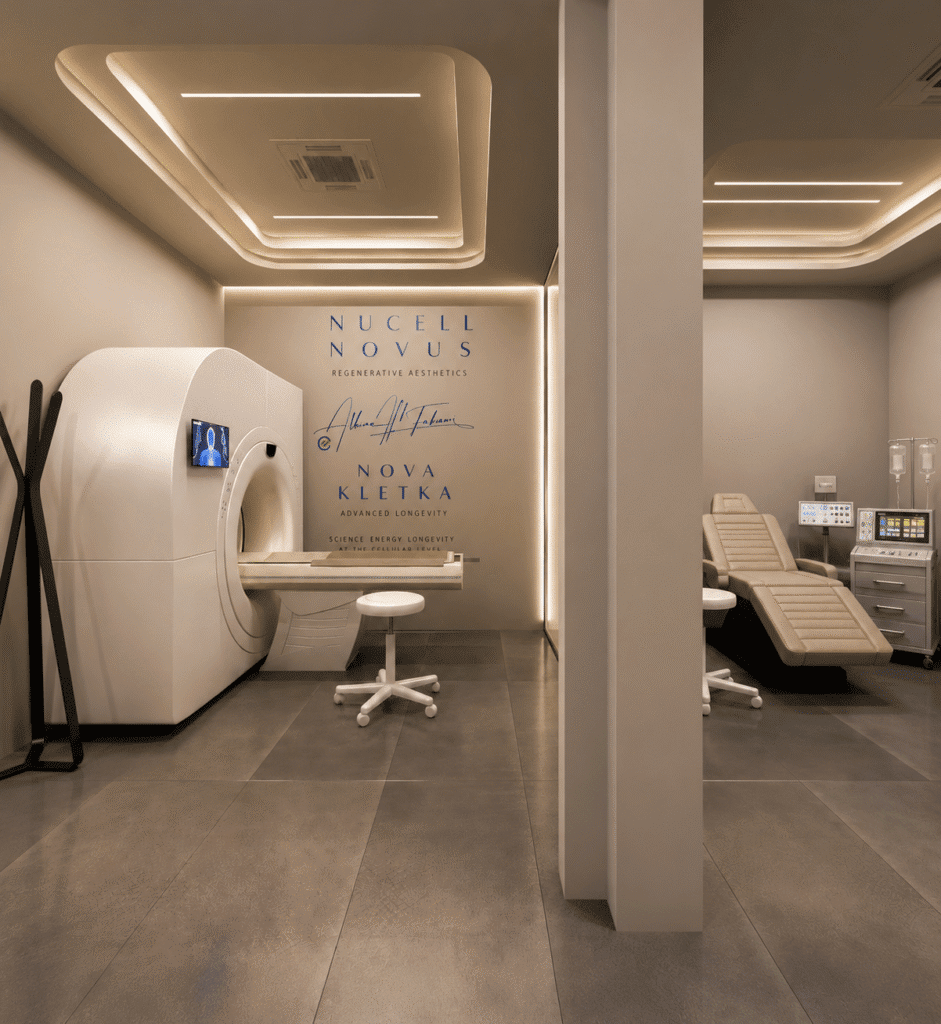
A Vision With International Reach
Fabiani’s conviction is that the future of human health will belong to original methodologies, not isolated treatments. That belief drives the international vision behind NuCell NOVUS. The goal is a network of centers, each grounded in the same scientific philosophy, each applying the same methodology with the same precision.
Such consistency is rare. It demands that the methodology travel intact, unaltered by local trends or convenient shortcuts. For Fabiani, that consistency is the point. A methodology is only meaningful if it holds across every center, every evaluation, and every individual it serves.
The work continues at the boundary of physics and medicine, where the team studies the bioelectric organization of living tissue. It is patient work, built on evidence and refined through application. And it represents a genuine attempt to expand how human biological function is evaluated and understood.
In an industry crowded with devices and promises, NuCell NOVUS offers a different proposition. Not a product, but a principle. Not a treatment, but a way of thinking about the body as the physical system it has always been.
Explore More About NuCell NOVUS
Connect with Albina Fabiani via NuCell NOVUS and Nova Kletka.