
Maia Brown-Jackson Writes The Unflinching Truth
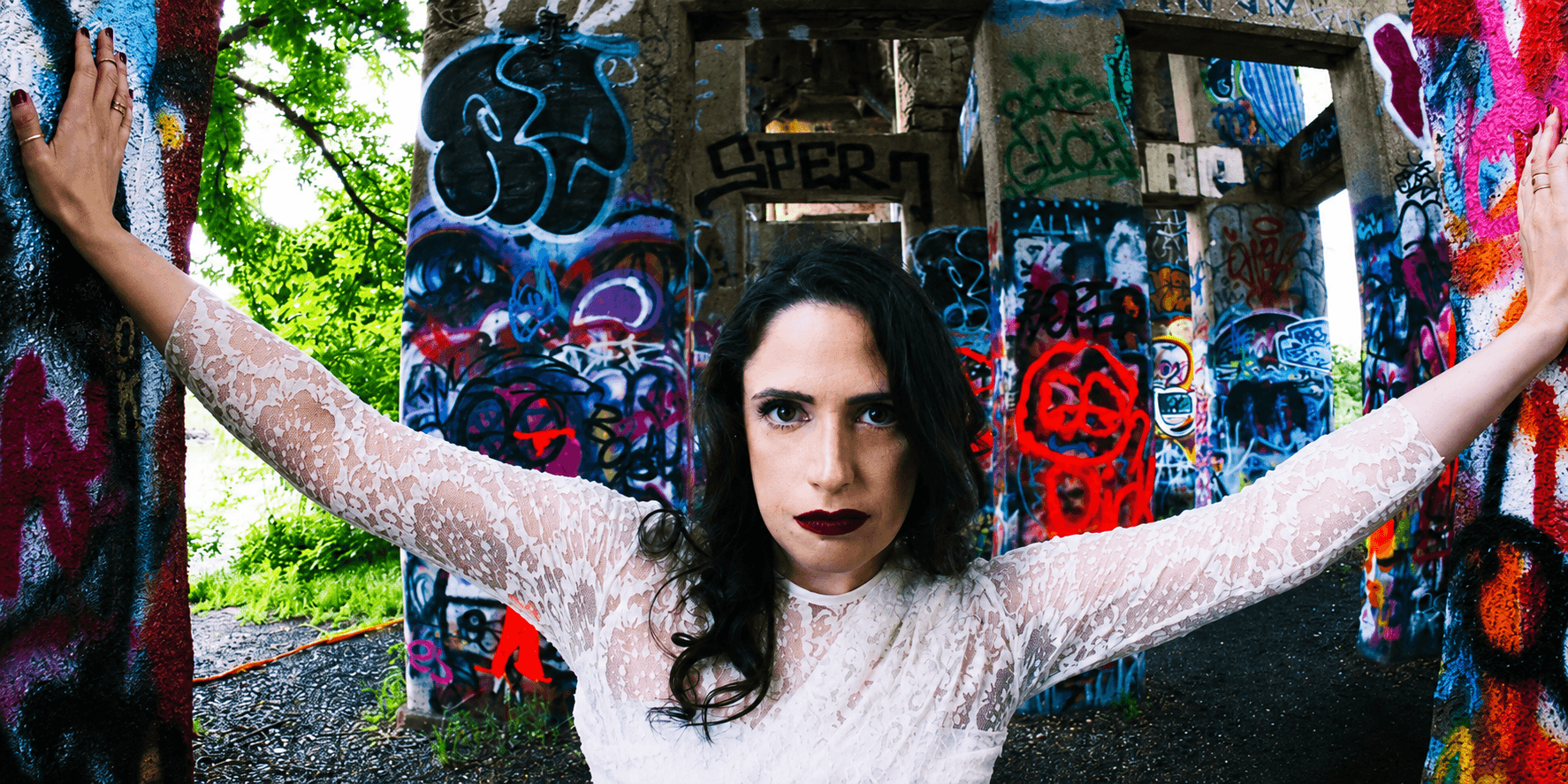
Her poems turn scar tissue into witness, asking readers to feel what the world teaches them to hide.
Before Maia Brown-Jackson had reader reviews, awards, or two published poetry collections, there was the harder private work: choosing what not to soften. The page does not always forgive a writer for telling the whole truth. It can look too raw, too angry, too much. Yet that is precisely where Maia Brown-Jackson poetry begins. It begins in the place polite language often avoids, where trauma, recovery, womanhood, love, rage, and hope arrive without apology.
Maia Brown-Jackson Poetry Begins In Noncompliance
Brown-Jackson’s work is rooted in a refusal to perform neatness. Her first collection, And My Blood Sang, examines trauma and recovery through the parts many people would rather skip: the ugly, uneven, furious, and fragile parts. The poems do not flatten pain into inspiration. Instead, they let readers stand inside the difficult middle, where healing is not a slogan but a daily act of survival, memory, and voice.
That candor has become one of her clear signatures. Brown-Jackson is not writing toward distance. She is writing toward contact. Her author world, including her Substack, calls in “reluctant idealists,” artists, over-feelers, and people who still believe change is possible even after seeing reasons to give up. The invitation is not polished into bland encouragement. It is direct, searching, and unmistakably human.
From Private Fire To Published Collections
The journey from private expression to public authorship is rarely simple, especially for a poet whose work depends on emotional exposure. Publishing asks a writer to turn inward truth into shared language, then release it to strangers. Brown-Jackson has done that with two poetry collections, And My Blood Sang and Gifted, each built around a distinct emotional and social terrain.
If And My Blood Sang confronts trauma and the hard architecture of recovery, Gifted turns toward the pressures people inherit and the roles they are taught to carry. Brown-Jackson describes the second collection as a book about breaking free from societal standards and the invisible labor women are forced to shoulder. In that sense, her poetry does more than confess. It questions the systems that make certain forms of silence feel normal.
Her range also resists easy packaging. Brown-Jackson writes about love in its destroyed and enamored forms, but she can also turn attention toward cavities, memory, outrage, and calls to raise hell. The subject may shift, yet the pulse remains consistent. The poems seek the place where personal experience becomes recognizable to someone else, where one voice makes another person feel less alone.
The Breakthrough Of An Uncompromising Voice
Recognition has followed that commitment to a distinctive voice. Brown-Jackson has been nominated for a Pushcart Prize and won the 2024 Prime 53 Poem Summer Challenge. These honors matter not because they make the work respectable, but because they affirm something her readers already sense: Maia Brown-Jackson poetry has an edge, a cadence, and a moral urgency that stand apart.
What makes her writing different is not simply that it is raw. Many writers aim for rawness. Brown-Jackson’s difference lies in the way she pairs intensity with invitation. Her work does not merely announce pain. It asks, “I have felt this. Have you?” That question, simple and devastating, is central to her literary presence. It transforms the poem from a sealed artifact into a conversation.
Her Substack expands that conversation beyond the boundaries of a collection. There, Brown-Jackson moves among poetry, short memoir, cultural commentary, artistic doubt, and global concern. She writes for people who care too much, people with what she calls “kintsugi hearts,” people who are awkwardly honest and not satisfied with detachment as a way of life. That language reveals a writer who understands the audience not as a market segment, but as a community of feeling.
Art, Action, And The Part Within Reach
Brown-Jackson’s author page offers another key to her work: the belief that one need not fix the entire world at once to matter. The task is to mend the part within reach. That philosophy links her art to her broader sense of responsibility, including her interest in humanitarian work and her close involvement with the Yuva Organization for Children’s Rights, which supports children in devastated areas connected to the Yazidi community.
This matters because Brown-Jackson’s poems are not only about interior life. They are about attention. They notice what people carry, what societies normalize, and what gets buried under performance. Her writing insists that feeling deeply is not a weakness. It can be a form of witness. It can also be a beginning.
In an era that often rewards irony, speed, and emotional distance, Brown-Jackson has chosen a harder lane. She writes as if sincerity still has teeth. She writes as if art can be intimate without being small, angry without being careless, and vulnerable without surrendering power. That balance gives her poetry its charge. Readers do not come to her work for tidy answers. They come for language that admits what life costs and still looks for a way through.
Why Readers Are Turning to Maia Brown-Jackson’s Poetry
For readers who have felt alienated by overly polished literary spaces, Brown-Jackson’s work offers relief. It is not engineered to sound fashionable. It is not afraid of being too much. That is part of its strength. The poems make room for people who have lived through rupture, who have questioned inherited expectations, who have loved with intensity, and who have learned that survival can leave both scars and music.
That combination of honesty and defiance gives her brand unusual clarity. Brown-Jackson is not asking readers to admire her from a distance. She is building a table for the ones who are still tender, still furious, still idealistic despite everything. Her collections give those readers language for what they may have carried in silence. Her newsletter gives them a continuing place to think, respond, and encounter a writer who values connection as much as craft.
For anyone looking for poetry that does not flinch, And My Blood Sang and Gifted are strong places to begin. Explore Maia Brown-Jackson poetry, read the reviews, subscribe to her essays and poems, and step into a body of work built for readers who want honesty with heat, witness with rhythm, and art that refuses to look away.
Explore More About Maia Brown-Jackson
Connect with Maia Brown-Jackson, Substack, Instagram, And My Blood Sang Reviews, and Published Work.

NY Review Contributor
Covers sport and entertainment in New York, from the arenas to the stages.
This article features partner, contributor, or branded content from a third party. Members of the NY Review editorial staff were not involved in the creation of this content. All views and opinions are those of the contributor alone.
You May Also Like

Why Families Keep Coming Back To Animal Hospital Of Sullivan County

2026 MacArthur Fellows Put American Creativity And Discovery In The National Spotlight

Best Data Entry Solutions for Growing E-commerce Businesses

Brooklyn Book Festival Brings Major Literary Gathering to New York City

Boston Red Sox Rally Past Chicago Cubs To Secure Wild Card Showdown With New York Yankees